BlockRider

vip
Age 1.2 Year
Peak Tier 0
No content yet
#TapAndPayWithGateCard
The modern crypto economy is rapidly evolving from a purely speculative market into a fully functional financial ecosystem where spending, earning, staking, and trading are all interconnected. One of the clearest examples of this transformation is the concept of “Tap and Pay with Gate Card”, combined with advanced reward structures such as 2x mining rate strategies and accumulation-based incentive systems.
At the center of this evolving ecosystem stands Gate.io, a global crypto exchange that has expanded far beyond trading into payments, earning products, and real-world
Dubai_Prince
#TapAndPayWithGateCard
The modern crypto economy is rapidly evolving from a purely speculative market into a fully functional financial ecosystem where spending, earning, staking, and trading are all interconnected. One of the clearest examples of this transformation is the concept of “Tap and Pay with Gate Card”, combined with advanced reward structures such as 2x mining rate strategies and accumulation-based incentive systems.
At the center of this evolving ecosystem stands Gate.io, a global crypto exchange that has expanded far beyond trading into payments, earning products, and real-world crypto utility. The integration of crypto cards, staking rewards, and incentive-driven participation models represents a major shift in how users interact with digital assets.
1. What “Tap and Pay with Gate Card” Actually Means
The phrase “Tap and Pay with Gate Card” refers to a contactless crypto payment system where users can spend their digital assets in real-world transactions using a crypto-linked card.
In simple but complete terms, it means:
👉 You can pay directly using your crypto balance by tapping a card at a payment terminal, without manually converting crypto into fiat currency beforehand.
This is made possible through the infrastructure provided by platforms like Gate.io, which bridges the gap between blockchain assets and traditional financial payment systems.
How it works in real life:
You hold crypto assets in your exchange wallet
You link them to a crypto card system
You go to a shop or restaurant
You tap the card on a payment machine
The crypto is instantly converted and payment is completed
This removes friction and makes crypto behave like real money in everyday life.
2. Why Tap and Pay Systems Are Important in Crypto Evolution
The introduction of crypto cards and tap-to-pay systems represents a major milestone because it solves one of the biggest problems in crypto adoption: real-world usability.
Previously, crypto was mostly limited to:
Trading on exchanges
Long-term holding
Speculative investment
But now, with systems like Gate Card:
👉 Crypto becomes a daily spending tool instead of just a digital asset.
This shift is extremely important because it transforms crypto from an investment-only class into a functional currency ecosystem.
3. Strategy Accumulation & 2x Mining Rate Model
Alongside payment innovation, the crypto ecosystem also includes advanced earning systems like Strategy Accumulates 2x Mining Rate models.
This concept means:
Users are rewarded for holding and accumulating assets
The reward generation rate is doubled (2x mining output)
Passive income increases without increasing investment size
In practical terms:
If a user previously earned a small yield from staking or mining, under a 2x system, that yield becomes significantly higher while the same capital remains invested.
This creates a strong behavioral incentive:
👉 Hold more → Earn more → Stay longer in the ecosystem
4. How These Two Systems Work Together
When we combine Tap and Pay systems with 2x mining rate accumulation strategies, the result is a fully integrated financial loop:
(A) Earn Phase
Users earn rewards through staking, mining, or yield programs.
(B) Accumulate Phase
Users hold and grow their crypto holdings instead of selling.
(C) Spend Phase
Users spend crypto directly using Gate Card via tap and pay.
This creates a closed ecosystem where:
Crypto is earned
Crypto is held
Crypto is spent
Everything happens inside one financial cycle.
5. Role of Gate.io in This Ecosystem Transformation
Gate.io plays a central role in this evolution by offering a multi-layered crypto ecosystem that includes:
1. Advanced Trading Infrastructure
Gate.io provides deep liquidity, fast execution, and access to a wide range of crypto assets, making it a strong foundation for global traders.
2. Staking and Yield Products
Users can participate in:
Flexible staking
Locked earning programs
Liquidity mining
Dual investment strategies
These directly support accumulation-based strategies.
3. Real-World Crypto Payments (Gate Card Concept)
The integration of crypto payment solutions allows users to:
Spend crypto instantly
Avoid manual conversion steps
Use crypto like fiat currency in daily life
4. Early Access to Emerging Ecosystems
Gate.io is known for listing innovative tokens and providing early access to new DeFi and blockchain projects, allowing users to participate in reward systems before they become mainstream.
6. Impact on the Crypto Market
The combination of tap-and-pay systems and enhanced mining rewards creates a significant impact on the crypto market structure.
(A) Increased Crypto Utility
Crypto is no longer just a trading asset. It becomes:
A savings tool
An income generator
A payment method
(B) Stronger Holding Behavior
Because of accumulation rewards:
Users are less likely to sell
Circulating supply decreases
Market stability increases
(C) Higher Adoption Rate
As crypto becomes easier to spend through systems like Gate Card:
Retail adoption increases
Merchant acceptance grows
Real-world usage expands
(D) Liquidity Redistribution
Funds move from short-term trading into:
Staking pools
Earn programs
Payment ecosystems
This reduces speculative volatility over time.
7. Risks and Structural Considerations
Even though these systems are highly innovative, they also come with important risks:
(A) Reward Sustainability
High reward systems like 2x mining rates must be carefully balanced to avoid inflation.
(B) Market Dependency
Crypto spending systems still depend on market liquidity and asset price stability.
(C) Behavioral Risk
Users may focus only on rewards and ignore long-term fundamentals.
(D) Regulatory Environment
Crypto payment systems must adapt to global financial regulations and compliance frameworks.
8. Psychological and Behavioral Market Effects
These systems also influence investor psychology significantly:
“If I hold more, I earn more” mindset strengthens accumulation behavior
Instant payment capability increases confidence in crypto usability
Passive income perception attracts new retail investors
Fear of missing reward cycles drives participation spikes
This creates a powerful emotional cycle that impacts both price action and adoption trends.
9. Long-Term Outlook of This Ecosystem
If developed sustainably, the integration of:
Tap and Pay crypto cards
2x mining rate reward systems
Accumulation-based incentives
Exchange-driven infrastructure
can transform crypto into a fully functional global financial layer.
This means:
👉 Crypto will no longer exist only as an investment market
👉 It will function as a parallel financial system used in daily life
Platforms like Gate.io are positioning themselves at the center of this transformation by combining trading, earning, and payment solutions into one ecosystem.
Final Conclusion
The concepts of “Tap and Pay with Gate Card” and “Strategy Accumulates 2x Mining Rate” represent two sides of the same evolution: one focuses on spending crypto in real life, while the other focuses on earning and accumulating crypto efficiently.
When combined, they create a complete financial loop where:
Users earn crypto through rewards
They accumulate and grow holdings through enhanced mining rates
They spend crypto directly in real-world transactions using tap-and-pay systems
In this structure, Gate.io acts as a powerful ecosystem bridge, connecting blockchain technology with practical financial utility.
Final insight:
This is not just a trend — it is a structural shift toward a future where crypto behaves like a complete financial system rather than just a speculative asset class.
  • Reward
  • 3
  • Repost
  • Share
ShainingMoon:
To The Moon 🌕
View More
#DailyPolymarketHotspot
#DailyPolymarketHotspot 🔥📊
The Rise of Information Markets — Where Probability Becomes Price
In today’s fast-moving financial world, the most valuable asset is no longer just capital or commodities—it is information, and more importantly, how quickly that information is converted into actionable insight, and this is exactly where Polymarket is redefining the landscape by transforming uncertainty into tradable probability, allowing global events to be priced in real time rather than debated through delayed opinions or static forecasts, creating a system where markets
UMA0.64%
BTC0.25%
Dubai_Prince
#DailyPolymarketHotspot
#DailyPolymarketHotspot 🔥📊
The Rise of Information Markets — Where Probability Becomes Price
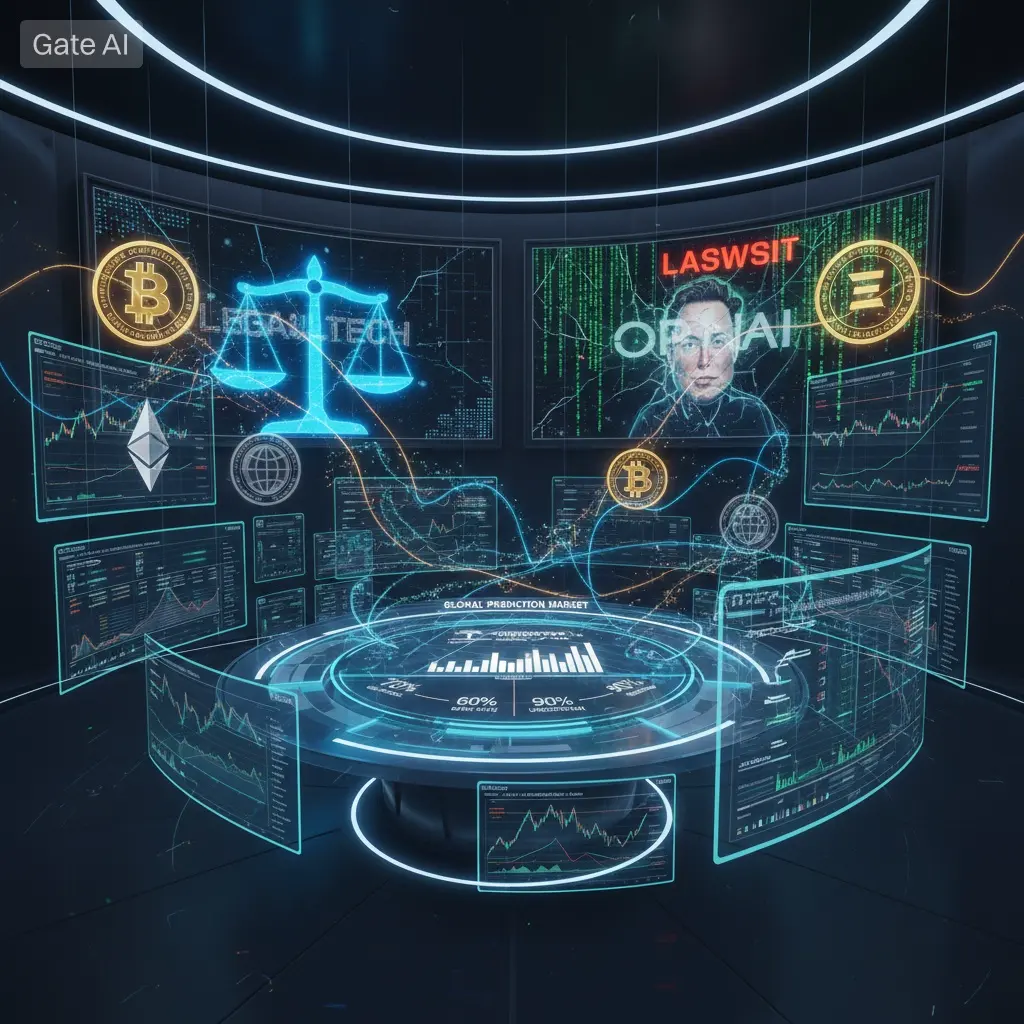
In today’s fast-moving financial world, the most valuable asset is no longer just capital or commodities—it is information, and more importantly, how quickly that information is converted into actionable insight, and this is exactly where Polymarket is redefining the landscape by transforming uncertainty into tradable probability, allowing global events to be priced in real time rather than debated through delayed opinions or static forecasts, creating a system where markets act as live intelligence engines that continuously update based on new data, sentiment, and capital flow.
From Opinion to Capital — A Shift in How We Predict the Future
Traditional forecasting relies heavily on opinions, surveys, and expert analysis, but prediction markets introduce a more disciplined model where participants must back their beliefs with money, which fundamentally changes behavior because financial risk filters out weak assumptions and emotional bias, and when a market assigns a price like $0.70 to an outcome, it represents a 70% probability derived from real trading activity, not speculation alone, meaning every trade contributes to a constantly evolving forecast that reflects collective conviction rather than passive opinion.
Real-Time Intelligence — Faster Than News, Sharper Than Polls
One of the most powerful advantages of prediction markets is their speed, as they process and reflect information almost instantly, often reacting to developments before traditional media narratives are formed, and whether it is crypto volatility, central bank decisions, political events, or geopolitical tensions, these markets absorb new information and translate it into price movements within seconds, effectively turning trading activity into a real-time sentiment indicator that can reveal shifts in expectations long before they become obvious elsewhere.
Technology & Trust — The Backbone of Modern Prediction Markets
The efficiency and reliability of this system are supported by blockchain infrastructure, particularly through Polygon, which enables fast, low-cost transactions, making participation smooth and accessible for a wide range of users, while the use of stable assets like USD Coin ensures that volatility comes from the event being traded rather than the currency itself, and equally critical is the role of decentralized verification systems such as UMA Protocol, which provide transparent and dispute-driven outcome resolution, ensuring fairness without relying on centralized authority, thereby strengthening trust in a system where financial outcomes depend on accurate results.
Market Dynamics — Sentiment, Liquidity, and Opportunity
While prediction markets offer powerful insights, they are still influenced by human behavior and market mechanics, where liquidity plays a crucial role in determining accuracy, as highly active markets tend to produce more reliable probabilities while low-volume markets can be distorted by small trades, and emotional trading remains a key factor, especially during major events where fear or excitement can temporarily misprice outcomes, creating opportunities for disciplined traders who understand that the real edge lies not in predicting the final result, but in identifying when the market’s current probability diverges from reality and adjusting positions accordingly.
BTC Context — Linking Price Action with Market Expectations
At the same time, in the broader crypto market, Bitcoin is currently trading around $76,305 after facing rejection near the $79K–$80K resistance zone, placing it in a short-term consolidation phase where the market is cooling rather than breaking down, and this is where combining price action with prediction market data becomes extremely powerful, because while charts show support and resistance levels, platforms like Polymarket reveal how traders are pricing the probability of future moves in real time.
Polymarket Example — Pricing the Next Move
Consider a live-style scenario on Polymarket
where the market asks: “Will BTC reach $80,000 before April 30?”
• If the “Yes” share trades at $0.65–$0.70, it reflects a 65–70% probability, signaling bullish expectations and confidence in a move higher
• If it trades near $0.50, it indicates uncertainty, aligning with a range-bound market between $75K–$78K
• If it drops to $0.30–$0.35, it reflects weakening sentiment and a higher probability of BTC failing to reach $80K, increasing the risk of a move toward $72K
The key insight here is not just the probability itself, but how it changes over time, because rising probability often signals accumulation before price moves, while falling probability can act as an early warning of weakening momentum even if price has not yet reacted.
Trading Strategy — Using Probability as an Edge
To navigate this environment effectively, traders should combine technical levels with probability shifts, focusing on confirmation rather than prediction, where holding above $75K alongside rising Polymarket probabilities strengthens the bullish case, while stable price with declining probabilities signals hidden weakness, and sharp drops in probability can indicate early-stage breakdown risk, and strategies such as scaling into support zones, waiting for volume-backed breakouts, avoiding over-leverage, and maintaining strict risk management remain essential, especially in conditions where sentiment can shift rapidly due to external news or liquidity changes.
Challenges & Future Outlook — Beyond Speculation
As prediction markets continue to grow, they also face challenges including regulatory scrutiny, concerns about insider trading, and the limitations of simplifying complex real-world outcomes into binary contracts, yet despite these issues, institutional interest is rising as these platforms prove valuable not just for trading but for understanding real-time market psychology and collective expectations, suggesting that in the future, prediction markets could become key tools for decision-making across finance, politics, and global strategy.
Final Perspective — The Future Is Being Priced in Real Time
In conclusion, Polymarket represents a major evolution in how we interpret the future, transforming information into a tradable asset and uncertainty into measurable probability, and when combined with real-time price action from assets like Bitcoin, it creates a powerful framework where traders are no longer just reacting to the market but anticipating it through probability shifts, and in a world overwhelmed by opinions, this approach offers something far more valuable—a signal backed by capital, where the future is not just predicted, but actively priced and continuously refined.
  • Reward
  • 3
  • Repost
  • Share
ShainingMoon:
To The Moon 🌕
View More
#WCTCTradingKingPK
1. The Core Reality: Most Participants Are Engineered to Lose
The uncomfortable truth that defines modern crypto markets is that the majority of participants are not operating with an edge. They are reacting, not analyzing; chasing, not positioning. This behavior doesn’t just lead to losses — it actively fuels the profits of more structured traders. Every impulsive breakout entry, every panic-driven exit, and every overleveraged position without context contributes to a system where uninformed traders become liquidity for informed ones.
The market does not reward effort alo
Dubai_Prince
#WCTCTradingKingPK
1. The Core Reality: Most Participants Are Engineered to Lose
The uncomfortable truth that defines modern crypto markets is that the majority of participants are not operating with an edge. They are reacting, not analyzing; chasing, not positioning. This behavior doesn’t just lead to losses — it actively fuels the profits of more structured traders. Every impulsive breakout entry, every panic-driven exit, and every overleveraged position without context contributes to a system where uninformed traders become liquidity for informed ones.
The market does not reward effort alone. It rewards precision, patience, and structural understanding. Without these, participation becomes predictable — and predictability in trading is exploitable.
---
2. Defining the Feature: What Market Structure Actually Means
Market Structure Awareness is not a vague concept; it is a framework for understanding how price moves with intention. Instead of focusing on isolated price points, it examines sequences and behavior.
Price action typically unfolds in phases:
Accumulation, where positions are built quietly;
Expansion, where momentum attracts attention;
Distribution, where early participants exit into late demand;
Manipulation, where liquidity is targeted through engineered moves.
Traders who fail to recognize these phases interpret movement as randomness. Traders who understand structure recognize that price is often moving toward liquidity objectives, not arbitrary levels.
---
3. The Critical Debate: Indicators vs Structural Insight
A large portion of retail traders depend heavily on indicators, believing they provide predictive clarity. However, indicators are inherently reactive; they process historical price data and present it in simplified form. This makes them useful for confirmation, but insufficient for anticipation.
Market structure, in contrast, provides contextual intelligence. It highlights where liquidity is concentrated, where traps are likely to occur, and where significant participants may be positioning.
The distinction is critical. Indicators tell you what has happened. Structure helps you understand why it happened and what is likely to follow.
Relying solely on indicators places traders in a reactive loop. Integrating structural awareness shifts them toward proactive decision-making.
---
4. Liquidity as the True Driver of Price Movement
Price does not move randomly; it moves in response to liquidity. Areas where orders are concentrated — such as equal highs, equal lows, obvious support and resistance, and psychological price levels — become targets.
These zones are not just technical markers; they represent clusters of stop losses and pending orders. Large participants often drive price into these areas to trigger those orders, creating the liquidity required to enter or exit positions efficiently.
What appears to be a breakout can often be a liquidity sweep. What appears to be a breakdown can be a setup for reversal. Without understanding this mechanism, traders misinterpret intent and consistently find themselves on the wrong side of moves.
---
5. Strategic Positioning: From Reaction to Anticipation
The shift from average to advanced trading begins with a change in perspective. Instead of asking where to enter based on visible momentum, structured traders analyze where the majority is likely to act — and position accordingly.
This approach is not about contrarian behavior for its own sake. It is about recognizing that markets often move against the most obvious expectations before continuing in their intended direction.
Positioning with structure means:
Entering with confirmation of intent rather than emotional impulse;
Exiting based on invalidation of structure rather than fear or greed;
Maintaining discipline even when the market environment appears uncertain.
This creates consistency, which is the foundation of long-term performance.
---
6. Risk Management: The Only Sustainable Advantage
No analytical framework, including market structure, eliminates risk. Losses are an inherent part of trading. The defining difference between successful and unsuccessful participants lies in how those losses are managed.
Effective risk management ensures that individual losses remain controlled and that capital is preserved for future opportunities. It transforms trading from a series of high-stakes guesses into a calculated process of probability management.
Without risk control, even accurate analysis fails to produce sustainable results. With it, even imperfect strategies can generate consistent growth over time.
---
7. Final Assessment: Awareness as a Competitive Edge
Market Structure Awareness is not an optional enhancement; it is a foundational requirement for serious participation in crypto markets.
Ignoring structure leads to reactive behavior and predictable outcomes.
Chasing momentum without context leads to repeated losses.
Operating without a framework leads to inconsistency.
Developing structural awareness changes the approach entirely. It enables traders to interpret price with depth, align with underlying intent, and execute decisions based on logic rather than emotion.
This is the distinction between participation and strategy, between randomness and calculated engagement.
---
Call to Action
Shift your perspective from surface-level signals to structural understanding. Analyze deeper, position with intent, and approach the market with discipline.
Master Market Structure Awareness and transform uncertainty into calculated opportunity.
repost-content-media
  • Reward
  • 4
  • Repost
  • Share
ShainingMoon:
To The Moon 🌕
View More
#CryptoMarketsDipSlightly
The cryptocurrency market is currently experiencing a modest pullback, reflecting a phase of short-term consolidation rather than a confirmed reversal of the broader trend. This slight dip follows a period of sustained upward momentum, where major digital assets recorded notable gains, attracting both retail and institutional participation. Such corrections are not only common but necessary in maintaining market stability and preventing overheating.
At the core of this dip lies a combination of profit-taking behavior and cautious sentiment among traders. After recent
Dubai_Prince
#CryptoMarketsDipSlightly
The cryptocurrency market is currently experiencing a modest pullback, reflecting a phase of short-term consolidation rather than a confirmed reversal of the broader trend. This slight dip follows a period of sustained upward momentum, where major digital assets recorded notable gains, attracting both retail and institutional participation. Such corrections are not only common but necessary in maintaining market stability and preventing overheating.
At the core of this dip lies a combination of profit-taking behavior and cautious sentiment among traders. After recent price surges, many market participants have opted to secure profits, leading to mild selling pressure across major trading pairs. This behavior is particularly visible in high-cap assets, where liquidity allows for easier entry and exit without causing extreme volatility.
Macroeconomic factors are also playing a subtle yet influential role. Global financial markets remain sensitive to interest rate expectations, inflation data, and central bank policies. Even minor shifts in these indicators can influence risk appetite, causing investors to temporarily step back from volatile assets like cryptocurrencies. As a result, capital rotation into safer assets or stablecoins can contribute to short-term downward pressure.
Additionally, derivatives market activity suggests a cooling phase. Funding rates have normalized, and leveraged positions are being reduced, indicating that excessive bullish sentiment is being flushed out. This reset is often considered healthy, as it reduces the risk of sudden liquidations and creates a more balanced trading environment.
On-chain data further supports the narrative of a controlled dip rather than panic selling. Wallet activity, exchange inflows, and long-term holder behavior show no signs of aggressive distribution. Instead, accumulation patterns remain intact, suggesting that larger players are maintaining confidence in the market’s long-term outlook.
From a technical perspective, key support levels are currently being tested. Price action indicates that the market is attempting to establish a higher low, which, if sustained, could reinforce the continuation of the broader uptrend. However, failure to hold these levels may lead to extended consolidation before the next significant move.
Market sentiment, while slightly cautious, has not shifted into fear territory. Traders are closely monitoring upcoming catalysts, including regulatory developments, institutional adoption news, and macroeconomic updates. These factors will likely determine the direction of the next major trend.
In conclusion, the current dip should be viewed within the context of a natural market cycle. Rather than signaling weakness, it reflects a period of recalibration where excess momentum is being absorbed. For disciplined participants, such phases often present strategic opportunities, provided risk management remains a priority.
repost-content-media
  • Reward
  • 3
  • Repost
  • Share
ShainingMoon:
To The Moon 🌕
View More
The emergence of #DailyPolymarketHotspot highlights a significant transformation in how modern markets interpret information, assess probabilities, and react to global events. In an era where data moves faster than ever, prediction markets have positioned themselves as real-time sentiment engines, offering a transparent and continuously evolving reflection of collective expectations.
At its core, this daily spotlight is designed to track and analyze the most trending prediction events on Polymarket. These events are not random; they represent the highest concentration of attention, liquidity,
Dubai_Prince
The emergence of #DailyPolymarketHotspot highlights a significant transformation in how modern markets interpret information, assess probabilities, and react to global events. In an era where data moves faster than ever, prediction markets have positioned themselves as real-time sentiment engines, offering a transparent and continuously evolving reflection of collective expectations.
At its core, this daily spotlight is designed to track and analyze the most trending prediction events on Polymarket. These events are not random; they represent the highest concentration of attention, liquidity, and speculation across multiple sectors. From cryptocurrency price movements and stock market expectations to geopolitical tensions and macroeconomic indicators, the scope is intentionally broad. This multi-sector coverage ensures that users are exposed to a comprehensive view of how different narratives are unfolding simultaneously across global markets.
One of the defining features of #DailyPolymarketHotspot is its focus on real-time volume tracking. Volume is not just a number—it is a signal. It reflects conviction, uncertainty, and participation intensity. When a prediction market experiences a surge in volume, it often indicates that new information has entered the system or that existing assumptions are being challenged. Traders who understand how to interpret volume dynamics can identify potential shifts before they fully materialize.
Equally important is the concept of leading outcomes. These represent the current market consensus based on aggregated trading activity. However, it is critical to understand that leading outcomes are not fixed truths—they are fluid probabilities that evolve as new data emerges. This dynamic nature creates opportunities for strategic positioning, especially for participants who can identify mispriced probabilities or delayed market reactions.
Another essential component embedded within this framework is the resolution mechanism. Each prediction event is governed by clearly defined rules and a predetermined resolution date. This ensures that outcomes are not subject to arbitrary interpretation, thereby maintaining fairness and credibility. The presence of structured resolution criteria distinguishes prediction markets from traditional speculation models, as it introduces accountability and verifiability into the process.
Beyond the technical aspects, #DailyPolymarketHotspot serves as a powerful tool for understanding market psychology. It captures how crowds process uncertainty, react to narratives, and adjust their expectations in real time. This behavioral dimension is often overlooked, yet it plays a crucial role in shaping price movements and trend formation. By studying how probabilities shift over time, participants can gain insights into sentiment cycles, overreactions, and potential reversals.
Furthermore, this daily spotlight encourages a transition from passive observation to active participation. Users are not merely spectators; they are contributors to the market’s collective intelligence. By placing trades based on their own analysis, they actively influence probability distributions and market direction. This interactive element transforms the experience into a feedback loop where information, action, and outcome continuously reinforce each other.
From a strategic standpoint, #DailyPolymarketHotspot aligns closely with modern trading philosophies that prioritize probability over certainty. Instead of asking whether an event will happen or not, participants evaluate the likelihood of different outcomes and position themselves accordingly. This probabilistic approach reduces binary thinking and promotes more nuanced decision-making, which is essential in highly volatile and information-driven environments.
In addition, the integration of macroeconomic and geopolitical themes within these prediction markets adds another layer of complexity and relevance. Events such as policy decisions, economic data releases, or international conflicts can significantly influence market sentiment. By incorporating these factors into prediction events, the platform creates a bridge between traditional financial analysis and decentralized forecasting.
Risk management also plays a critical role within this ecosystem. While the potential for profit exists, so does the possibility of loss. Understanding probability distributions, avoiding emotional decision-making, and maintaining disciplined positioning are key factors that determine long-term success. The transparency of data within #DailyPolymarketHotspot provides users with the tools needed to make informed decisions, but the responsibility of execution ultimately lies with the participant.
In conclusion, Dailypolymarkethotspot is not just a feature—it is a reflection of how markets are evolving toward intelligence-driven, probability-based systems. It combines real-time data, crowd sentiment, and structured outcomes into a unified framework that empowers users to think critically, act strategically, and adapt continuously. Those who can interpret the signals hidden within volume, outcomes, and timing will not only follow the market—they will understand it at a deeper level and position themselves ahead of the curve.
repost-content-media
  • Reward
  • Comment
  • Repost
  • Share
#DailyPolymarketHotspot
#Polymarket每日热点
In 2026, the crypto market is no longer driven solely by charts, indicators, or historical price behavior. Those tools still matter — but they are now secondary layers. The real edge has shifted toward forward-looking probability systems, and among them, prediction markets have emerged as one of the most powerful intelligence mechanisms.
Platforms such as Polymarket are no longer niche experiments. They are evolving into live consensus engines, where capital-backed beliefs determine how future events are priced before they unfold. This is the key distin
BTC0.25%
ETH0.34%
MEME0.24%
Dubai_Prince
#DailyPolymarketHotspot
#Polymarket每日热点
In 2026, the crypto market is no longer driven solely by charts, indicators, or historical price behavior. Those tools still matter — but they are now secondary layers. The real edge has shifted toward forward-looking probability systems, and among them, prediction markets have emerged as one of the most powerful intelligence mechanisms.
Platforms such as Polymarket are no longer niche experiments. They are evolving into live consensus engines, where capital-backed beliefs determine how future events are priced before they unfold. This is the key distinction: traditional markets react — prediction markets anticipate.
The DailyPolymarketHotspot is not just a list of trending bets. It represents a compressed view of global conviction, combining retail speculation, institutional positioning, and macro expectations into one dynamic probability layer.
Market Structure Reality: Volatility Is the Core Signal
The crypto market in 2026 is defined by controlled volatility cycles, not random movement.
Bitcoin (BTC) operates within structured expansion ranges, typically pushing +4% to +10% upward waves, while pullbacks remain contained within -3% to -7% liquidity resets
Ethereum (ETH) behaves as a higher-beta extension, with +3% to +8% expansions and -2% to -6% retracements
Altcoins dominate in rotational bursts, delivering +10% to +30% rallies, followed by -8% to -20% corrections
Meme assets exist in extreme cycles, where +20% to +50% spikes are often erased just as quickly
The key insight: Polymarket does not just track direction — it maps where volatility will expand next.
Bitcoin Sentiment Layer: The Primary Market Driver
Bitcoin remains the central axis of crypto sentiment.
Current probability structure across prediction markets:
Continuation above $80,000 is heavily favored (~90%+ probability zones)
Expansion toward $90,000 sits in mid-confidence territory (~60% range)
Breakout beyond $100,000 remains speculative but highly watched (~35–45%)
These expectations are not random. They are anchored in:
ETF inflow consistency
Post-halving supply compression
Global liquidity cycles
Institutional accumulation patterns
A critical behavioral pattern:
When Bitcoin sentiment strengthens even marginally (around +3% to +5% weekly probability shift), it often triggers capital rotation into altcoins.
Ethereum: From Asset to Ecosystem Index
Ethereum is no longer traded purely as a directional asset — it is increasingly valued as a network growth proxy.
Core expectation zones:
Stability range: $2,500–$3,500
Bullish expansion phases: +5% to +8%
Corrections: -3% to -6%
Prediction market focus includes:
Layer-2 adoption rates
Staking yield sustainability
DeFi liquidity growth
Upgrade execution success
Ethereum’s role is structural — it anchors the market while Bitcoin leads it.
Institutional Capital & ETF Flow Signals
One of the most reliable forward indicators in 2026 comes from ETF-related sentiment tracking.
Observed patterns:
Sustained inflows → consistent +3% to +6% upward pressure on BTC
Slowing inflows → sideways movement or mild corrections
New approvals → sharp localized rallies across altcoins (+5% to +15%)
This segment acts as a bridge between traditional finance and crypto volatility cycles.
Altcoin Rotation Mechanics
Altcoins represent risk amplification layers.
Cycle structure typically unfolds as:
1. Early rotation → +6% to +15%
2. Momentum expansion → +10% to +30%
3. Distribution → -8% to -20%
Prediction markets often detect these rotations before they become visible on charts, making them a powerful early signal.
Meme Coin Activity: Retail Emotion Indicator
Meme coins function as pure sentiment thermometers.
Breakout phase → +20% to +50% spikes
Cooling → rapid -10% to -25% pullbacks
Accumulation → low-volatility consolidation
When meme activity surges, it usually signals peak retail participation and elevated risk appetite.
Regulatory Impact: External Volatility Catalyst
Regulation continues to inject macro-level uncertainty into crypto pricing.
Positive clarity → +2% to +7% expansion
Restrictive tone → -3% to -8% downside pressure
Neutral stance → consolidation phases
Even without direct control, regulatory sentiment shapes market confidence cycles.
Market Psychology: Why Prediction Markets Matter
Unlike social media sentiment, prediction markets involve real capital commitment.
This creates three advantages:
Probability reflects conviction, not opinion
Reactions are faster than traditional markets
Crowd intelligence aggregates instantly
However, it’s not flawless.
Risk Framework: Critical Limitations
Probabilities are not guarantees
Crowd bias can distort outcomes
Liquidity concentration can skew signals
Large players can temporarily manipulate sentiment
Polymarket should be treated as a sentiment overlay, not a standalone decision engine.
Strategic Integration for Advanced Traders
Professionals combine prediction data with:
Technical levels (support/resistance)
On-chain capital flows
Funding rates and derivatives positioning
Macro events (CPI, FOMC, ETF data)
This creates a multi-layer confirmation model, reducing reliance on single-point signals.
Macro Crossover: AI Industry Shockwave
Beyond crypto, a major development is unfolding in the AI sector.
Elon Musk has taken legal action against OpenAI, pushing a critical debate into the courtroom. The dispute centers on whether OpenAI deviated from its original mission of being open and non-profit by transitioning into a commercial entity.
This case is not just legal noise — it has broader implications:
It challenges governance models in AI development
It may reshape how innovation is funded and controlled
It introduces regulatory attention to AI commercialization
If the outcome restricts or reshapes OpenAI’s trajectory, the ripple effect could extend into AI-driven crypto narratives, especially in sectors tied to automation, data, and decentralized intelligence.
Final Outlook: The New Market Intelligence Era
In 2026, the market operates on layered intelligence:
Bitcoin defines direction
Ethereum stabilizes structure
Altcoins amplify opportunity
Meme coins expose emotion
Prediction markets reveal expectations before reality forms
The DailyPolymarketHotspot is no longer optional insight — it is becoming a core strategic layer for understanding where the market is heading next.
Those who rely only on charts react late.
Those who understand probability positioning move early.
repost-content-media
  • Reward
  • Comment
  • Repost
  • Share
##FedHoldsRateButDividesDeepen The latest Federal Reserve decision has delivered a message that is far more complex than a simple “rate hold.” While the central bank kept interest rates unchanged for the third straight meeting, the underlying dynamics reveal a growing fracture within policymakers — a signal markets cannot afford to ignore.
At the surface level, maintaining the current rate range suggests a wait-and-watch approach. However, the voting pattern tells a deeper story. A significant split among decision-makers reflects rising uncertainty about the future path of monetary policy. Thi
Dubai_Prince
##FedHoldsRateButDividesDeepen The latest Federal Reserve decision has delivered a message that is far more complex than a simple “rate hold.” While the central bank kept interest rates unchanged for the third straight meeting, the underlying dynamics reveal a growing fracture within policymakers — a signal markets cannot afford to ignore.
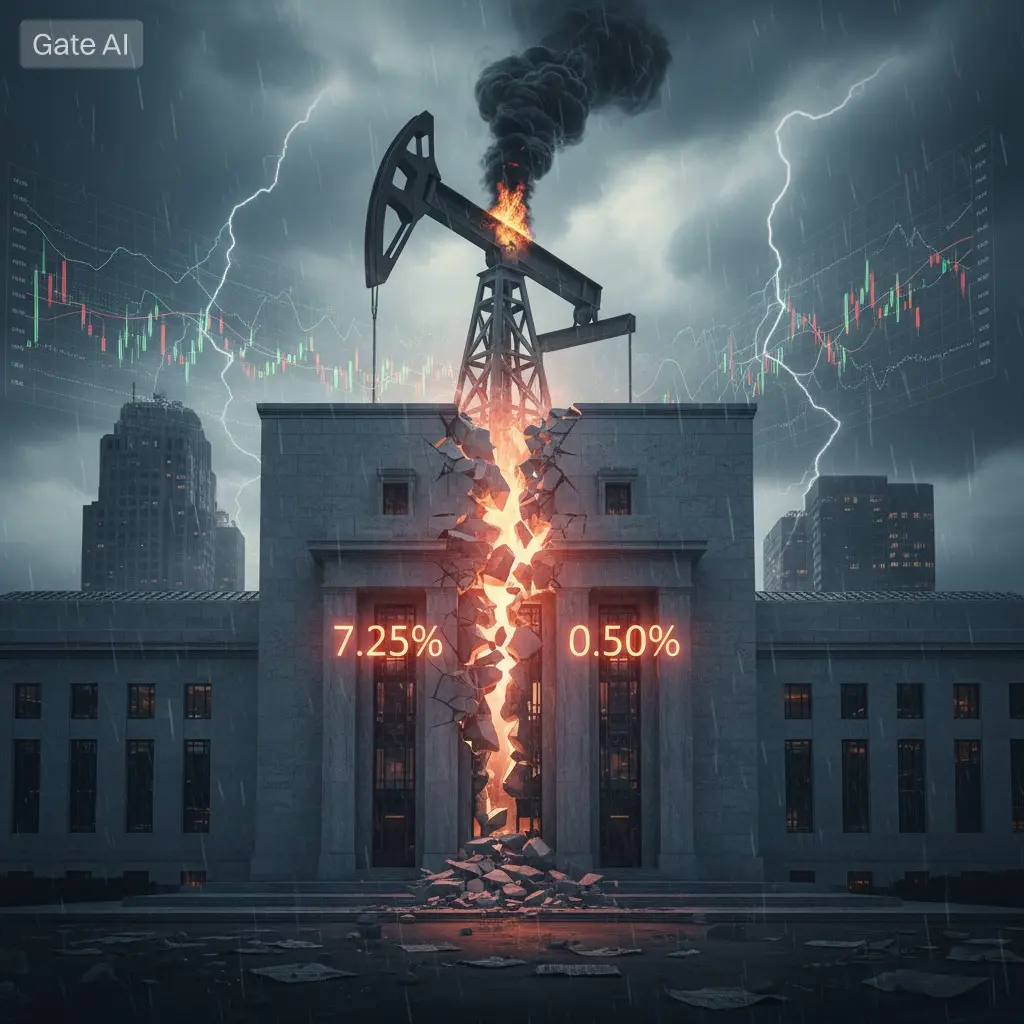
At the surface level, maintaining the current rate range suggests a wait-and-watch approach. However, the voting pattern tells a deeper story. A significant split among decision-makers reflects rising uncertainty about the future path of monetary policy. This is not just a disagreement — it is a sign that consensus is weakening at a critical moment for the global economy.
A portion of policymakers resisted any indication of easing, highlighting concerns that inflationary pressures are still persistent. At the same time, at least one voice pushed for immediate rate cuts, indicating that parts of the economy may already be feeling the strain of tight financial conditions. This divergence signals that the Federal Reserve is no longer moving with unified conviction.
One of the most important factors shaping this outlook is the continued strength in inflation, particularly driven by elevated energy prices. Ongoing geopolitical tensions have kept oil markets tight, feeding directly into broader price pressures. This complicates the Fed’s task — cutting rates too early risks reigniting inflation, while holding too long could slow economic momentum further.
Financial markets are now recalibrating expectations. Earlier assumptions of aggressive rate cuts are being replaced with a more cautious outlook. The possibility that interest rates may remain elevated for an extended period — or even rise again — is being increasingly priced in.
This shift has direct consequences for risk assets. Higher interest rates typically reduce liquidity and increase the cost of capital, creating pressure on equities and cryptocurrencies alike. Investors who previously relied on easy monetary conditions must now adjust to a tighter environment where capital efficiency and risk management become critical.
At the same time, the internal divide within the Fed introduces an additional layer of uncertainty. Markets thrive on clarity, but the current situation offers the opposite — conflicting signals from policymakers. This increases volatility as investors react not just to economic data, but also to shifting narratives within the central bank itself.
From a strategic perspective, this environment demands caution rather than blind optimism. The era of predictable policy direction appears to be fading, replaced by a more reactive and data-dependent approach. Traders and investors must remain flexible, closely monitoring macroeconomic indicators, inflation trends, and geopolitical developments.
In conclusion, the decision to hold rates is only the headline. The real story lies in the growing اختلاف (division) within the Federal Reserve, persistent inflation pressures, and the evolving expectations of global markets. This combination creates a landscape where uncertainty dominates — and in such conditions, only disciplined and well-informed strategies can succeed.
##FedHoldsRateButDividesDeepen
repost-content-media
  • Reward
  • Comment
  • Repost
  • Share
#BitcoinSpotVolumeNewLow The latest on-chain and market data reveals a significant shift in the current cryptocurrency landscape, as Bitcoin’s spot trading volume has dropped to critically low levels, signaling a phase of reduced market participation and declining short-term activity.
Market Overview
Recent data indicates that daily spot trading volume for Bitcoin has slipped below the $8 billion threshold, marking one of the weakest activity periods observed since October 2023. This represents a sharp contraction compared to previous high-liquidity phases, reflecting a clear slowdown in immed
BTC0.25%
Dubai_Prince
#BitcoinSpotVolumeNewLow The latest on-chain and market data reveals a significant shift in the current cryptocurrency landscape, as Bitcoin’s spot trading volume has dropped to critically low levels, signaling a phase of reduced market participation and declining short-term activity.
Market Overview
Recent data indicates that daily spot trading volume for Bitcoin has slipped below the $8 billion threshold, marking one of the weakest activity periods observed since October 2023. This represents a sharp contraction compared to previous high-liquidity phases, reflecting a clear slowdown in immediate buying and selling pressure across major exchanges.
Volume Compression and Its Meaning
A decline in spot volume at this scale typically suggests one of two scenarios:
Market participants are stepping back, waiting for stronger confirmation before entering positions.
Institutional flows are temporarily paused, leading to reduced liquidity and thinner order books.
This type of volume compression often creates an environment where price movements become less reliable in the short term but more explosive once momentum returns.
Liquidity Conditions
Lower trading volume directly impacts liquidity, making the market more sensitive to large orders. Even moderate buy or sell pressure can trigger disproportionate price swings due to the lack of depth in the market. This increases volatility risk despite the current calm appearance.
Historical Context
The last time Bitcoin experienced similar spot volume conditions was during a consolidation phase before a major directional move. Historically, such quiet periods have not lasted long and are often followed by sharp expansions in volatility, either upward or downward depending on macro and sentiment drivers.
Market Psychology
The current state reflects uncertainty rather than weakness. Traders are not aggressively exiting positions, but they are also not entering with conviction. This results in a neutral-to-cautious sentiment environment where the market pauses before its next decisive move.
Possible Interpretations
1. Accumulation Phase
Smart money may be quietly accumulating positions during this low-volume phase, avoiding attention while retail participation remains minimal.
2. Pre-Breakout Structure
Low volume frequently precedes breakout conditions. Once liquidity returns, price can move rapidly due to built-up pressure.
3. Market Indecision
The absence of strong volume may also indicate indecision, where neither bulls nor bears have enough confidence to dominate.
Risk Factors
Sudden volatility spikes due to thin liquidity
False breakouts caused by low participation
Increased sensitivity to macroeconomic news or regulatory developments
Strategic Outlook
Traders and investors should treat this phase as a preparation zone rather than a confirmation phase. Key actions include:
Monitoring volume expansion signals
Watching key resistance and support levels
Avoiding over-leveraged positions in low-liquidity conditions
Forward Perspective
The current environment can be described as a “silent market,” where activity is subdued but underlying tension is building. Once volume begins to return, it will likely define the direction of the next major trend.
Conclusion
Bitcoin’s drop in spot trading volume to multi-month lows is not merely a sign of weakness but a signal of transition. Markets rarely stay quiet for long, and this phase may represent the foundation for the next significant move. Whether this leads to a breakout rally or a corrective phase will depend on how liquidity re-enters the system and how participants respond to upcoming catalysts.
The key question remains:
Is this a calm consolidation before expansion — or a pause before renewed downside pressure?
Only the return of volume will provide the answer.
repost-content-media
  • Reward
  • Comment
  • Repost
  • Share
#OilBreaks110
The global energy market has entered a high-volatility phase as Brent crude experienced an aggressive upside breakout, temporarily pushing beyond the $141 level during heightened geopolitical disruption around the Strait of Hormuz — one of the most strategically critical oil transit chokepoints in the world. Although prices have since cooled and stabilized near the $111–$112 range, the implications of this spike extend far beyond short-term price action.
This was not a random move. It was a liquidity-driven shock fueled by supply-side fears, geopolitical risk premium expansion,
Dubai_Prince
#OilBreaks110
The global energy market has entered a high-volatility phase as Brent crude experienced an aggressive upside breakout, temporarily pushing beyond the $141 level during heightened geopolitical disruption around the Strait of Hormuz — one of the most strategically critical oil transit chokepoints in the world. Although prices have since cooled and stabilized near the $111–$112 range, the implications of this spike extend far beyond short-term price action.
This was not a random move. It was a liquidity-driven shock fueled by supply-side fears, geopolitical risk premium expansion, and aggressive speculative positioning. The temporary breakout above $140 signals how fragile the current energy equilibrium is — even a partial disruption in this region can send shockwaves across global markets.
From a macroeconomic perspective, this surge has immediately altered inflation expectations. Energy remains a core input across all sectors — transportation, manufacturing, logistics, and food supply chains. When crude spikes this sharply, forward inflation projections rise almost instantly, forcing market participants to reassess central bank policy trajectories.
As a direct consequence, expectations for Federal Reserve rate cuts have weakened significantly. Prior to this event, markets were pricing in a more dovish stance due to slowing growth signals. However, rising oil prices complicate that narrative. Higher energy costs translate into persistent inflationary pressure, reducing the Fed’s flexibility to ease monetary policy without risking credibility.
This creates a tightening feedback loop across financial markets. As rate cut expectations fade, yields tend to stabilize or rise, liquidity conditions tighten, and risk appetite weakens. This is exactly what we are beginning to observe.
Risk assets — particularly cryptocurrencies and high-growth equities — are now facing renewed pressure. These asset classes are highly sensitive to liquidity conditions. When macro liquidity tightens and capital becomes more expensive, speculative flows tend to contract. This doesn’t necessarily indicate a structural breakdown, but it does signal a shift from aggressive risk-on behavior to a more cautious, defensive positioning environment.
At the same time, institutional capital is likely rotating toward safer or inflation-hedged assets. Commodities, energy equities, and defensive sectors may see increased allocation as investors seek protection against macro uncertainty and rising input costs.
Another key dimension is market psychology. Sudden spikes like this introduce uncertainty premiums into pricing models. Traders are no longer just reacting to data — they are pricing in potential escalation scenarios. This leads to increased volatility, wider spreads, and less predictable short-term price behavior across all asset classes.
However, it is important to separate structural trends from event-driven spikes. If the Strait of Hormuz disruption remains temporary or controlled, oil prices may retrace and stabilize. But if tensions escalate or supply constraints persist, we could see a sustained higher range for crude, which would reinforce inflation pressures and prolong tight financial conditions globally.
In this environment, strategic positioning becomes critical. Traders and investors must shift from reactive decision-making to scenario-based planning. Understanding macro drivers — not just technical indicators — becomes essential.
Key takeaways from this development:
• The breakout above $140 confirms extreme sensitivity of oil markets to geopolitical disruptions
• Inflation expectations have been re-priced upward, impacting global monetary outlook
• Federal Reserve rate cut probabilities have declined, reinforcing a tighter policy stance
• Risk assets are entering a more cautious phase due to reduced liquidity support
• Market volatility is likely to remain elevated as uncertainty persists
This is not just an oil story — this is a macro liquidity event with cross-market implications. The coming sessions will determine whether this was a temporary shock or the beginning of a broader structural shift in global financial conditions.
repost-content-media
  • Reward
  • Comment
  • Repost
  • Share
#BitcoinBouncesBack — Market Briefing
After weeks of sustained downside pressure, the crypto market has staged a notable recovery, with Bitcoin reclaiming the $78,000 level and Ethereum moving back above $2,400. This rebound marks a shift in short-term sentiment, but the broader structure still reflects a market in transition rather than a confirmed trend reversal.
What drove Bitcoin above $78,000?
The breakout was fueled by three key forces. First, macro sentiment improved after news of a temporary Iran ceasefire extension, which reduced geopolitical risk and supported risk assets. Second, a
BTC0.25%
ETH0.34%
Dubai_Prince
#BitcoinBouncesBack — Market Briefing
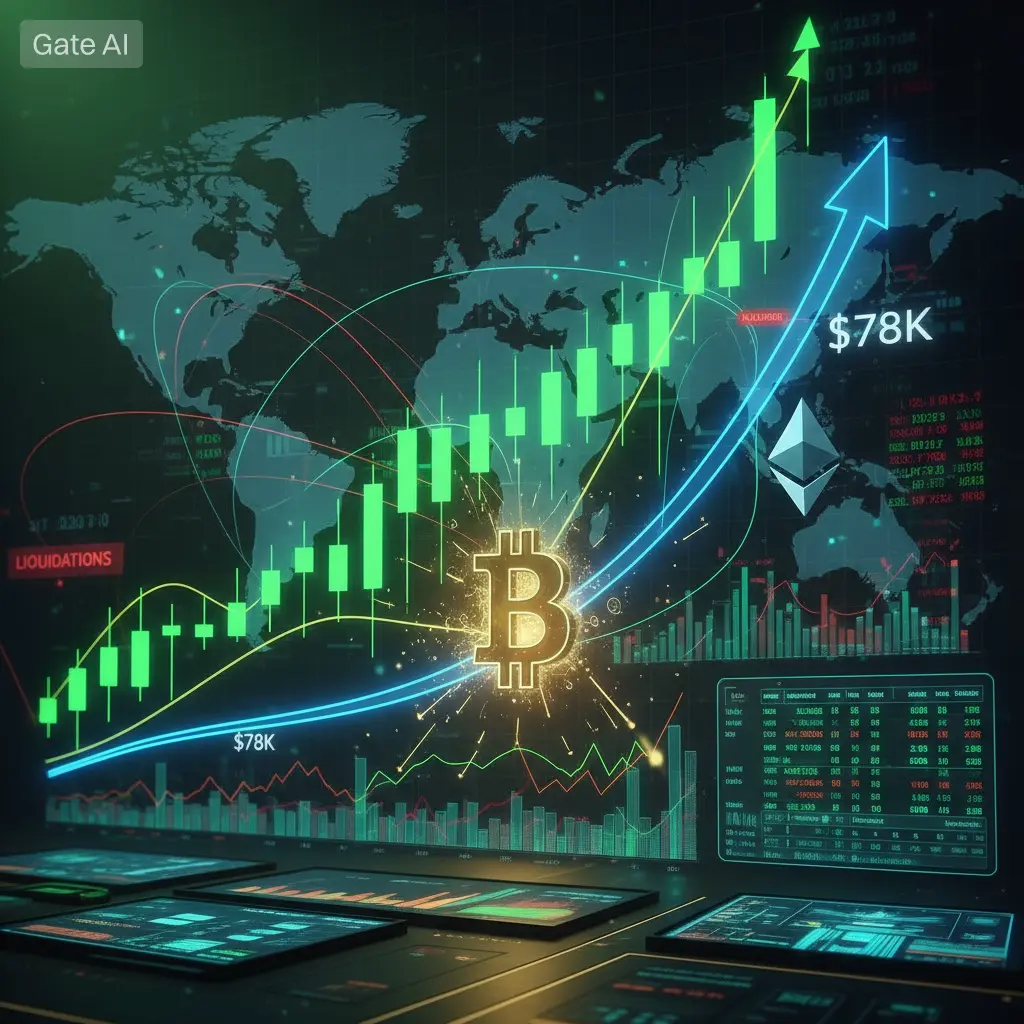
After weeks of sustained downside pressure, the crypto market has staged a notable recovery, with Bitcoin reclaiming the $78,000 level and Ethereum moving back above $2,400. This rebound marks a shift in short-term sentiment, but the broader structure still reflects a market in transition rather than a confirmed trend reversal.
What drove Bitcoin above $78,000?
The breakout was fueled by three key forces. First, macro sentiment improved after news of a temporary Iran ceasefire extension, which reduced geopolitical risk and supported risk assets. Second, a strong short squeeze accelerated the move upward, as heavily leveraged bearish positions were liquidated during the price surge. Third, consistent inflows into spot Bitcoin ETFs—recorded over five consecutive days—provided a strong absorption base, signaling institutional accumulation near local bottoms.
What does the Fear & Greed Index shift mean?
The index rebounded from 12 (extreme fear) to 32 (panic), indicating partial emotional recovery. This suggests the market has exited capitulation territory but has not yet reached confidence levels associated with sustainable uptrends. Historically, this phase represents the early stage of sentiment repair, where short-covering rallies dominate but conviction buying remains limited.
What do liquidation patterns reveal?
Liquidation data highlights a key structural divergence. Over a 24-hour period, long and short liquidations were nearly balanced, indicating indecision in broader direction. However, in shorter timeframes, nearly 72% of liquidations came from short positions, confirming that the recent rally was primarily driven by forced short closures rather than aggressive long positioning. This implies that momentum may weaken if fresh buying demand does not step in.
Has the market confirmed a bottom?
Not yet. While extreme fear conditions often coincide with market bottoms, confirmation typically requires three aligned signals:
1. Sustained institutional inflows (currently present),
2. A balanced or long-dominant derivatives structure (still developing),
3. Reduced macro uncertainty (still unresolved).
At present, only one of these conditions has clearly materialized.
Is Ethereum showing independent strength?
Ethereum’s rebound has largely mirrored Bitcoin’s movement, with the ETH/BTC ratio remaining stable. While ETF inflows into Ethereum products show strong institutional interest, on-chain activity remains subdued, indicating that its recovery is still closely tied to Bitcoin rather than driven by independent fundamentals.
Market Structure & Outlook
The current rally can be classified as a technical rebound driven by short covering, supported by early-stage institutional accumulation. However, the absence of strong follow-through from long-side positioning raises questions about sustainability. Open interest is rising, but unless this is accompanied by genuine long exposure rather than speculative leverage, the market may revert to consolidation or experience a secondary dip.
Additionally, macro uncertainty—particularly around upcoming Federal Reserve decisions and derivative expiries—remains a key overhang. These factors could introduce volatility and limit upside continuation in the short term.
Conclusion
Bitcoin’s recovery above $78,000 reflects improving sentiment and strong institutional backing, but the market is still in a transitional phase. The shift from fear to cautious optimism is underway, yet confirmation of a long-term bullish trend will depend on deeper structural changes, including stronger long participation and clearer macro direction.
#BitcoinBouncesBack #CryptoMarket #Bitcoin #Ethereum
repost-content-media
  • Reward
  • Comment
  • Repost
  • Share
#Gate13thAnniversaryLive
THIRTEEN YEARS OF RESILIENCE, INNOVATION, AND GLOBAL IMPACT
Gate’s 13th anniversary marks more than just time passed—it represents one of the most consistent growth stories in the cryptocurrency industry. Since its founding in 2013, when digital assets were still an emerging concept, Gate has evolved into a global platform serving millions of users across diverse markets. Through multiple market cycles, technological shifts, and regulatory changes, it has maintained stability while continuing to expand its capabilities.
From its early days as a simple trading platform
Dubai_Prince
#Gate13thAnniversaryLive
THIRTEEN YEARS OF RESILIENCE, INNOVATION, AND GLOBAL IMPACT
Gate’s 13th anniversary marks more than just time passed—it represents one of the most consistent growth stories in the cryptocurrency industry. Since its founding in 2013, when digital assets were still an emerging concept, Gate has evolved into a global platform serving millions of users across diverse markets. Through multiple market cycles, technological shifts, and regulatory changes, it has maintained stability while continuing to expand its capabilities.
From its early days as a simple trading platform, Gate has transformed into a multi-asset ecosystem offering access to thousands of digital assets alongside advanced trading products. Its growth is reflected in increasing trading volumes, expanding user adoption, and a strong presence among leading exchanges worldwide. This progress highlights not just scale, but sustained trust from a global user base.
Security and transparency have remained central to Gate’s development. By maintaining a reserve ratio exceeding full user deposits and implementing verifiable proof of reserves, the platform has focused on building long-term confidence in an industry where trust is critical. These measures position it among the more transparent and security-focused exchanges operating today.
Gate has also expanded beyond traditional crypto trading by integrating elements of traditional finance. The introduction of tokenized assets and broader market exposure allows users to diversify within a single platform. This approach reflects a broader shift in the financial landscape, where digital and traditional systems are gradually converging.
Innovation continues to play a key role in Gate’s strategy. With the integration of AI-driven tools, enhanced trading infrastructure, and growing decentralized ecosystem support, the platform is adapting to the next phase of digital finance. The combination of centralized efficiency and decentralized accessibility offers users flexibility while maintaining performance.
Regulatory alignment has further supported its global expansion. By operating within multiple jurisdictions and developing structured compliance frameworks, Gate demonstrates a long-term commitment to sustainable growth rather than short-term advantage. This balance between innovation and regulation is essential for future scalability.
Beyond technology and markets, the platform’s community remains a defining factor. Over the years, users, developers, and traders have contributed to its evolution, making it more than just an exchange. The anniversary represents a shared journey shaped by participation, feedback, and continuous development.
Looking ahead, the focus is on deeper integration of financial systems, increased adoption of blockchain technology, and the growing role of artificial intelligence in trading and analysis. Gate’s direction suggests it aims not only to adapt to these changes but to actively shape them.
Thirteen years in the crypto industry is a significant achievement. While many platforms have struggled to survive, Gate has continued to expand, refine, and strengthen its position. This milestone reflects endurance, strategic vision, and a commitment to building long-term value.
As the industry moves forward, the next phase will demand even greater innovation, transparency, and user-focused development. Gate’s journey so far indicates a strong foundation for what lies ahead.
#GateGala13 #CryptoExchange #Web3 #Blockchain
repost-content-media
  • Reward
  • Comment
  • Repost
  • Share
#WCTCTradingKingPK
WCTC S8 Trading King PK - The Ultimate Trading Showdown
The World Crypto Trading Competition (WCTC) Season 8 is here, and it's bigger than ever. As Gate celebrates its 13th anniversary, this year's competition brings an unprecedented $8 million prize pool across multiple formats. Whether you're a seasoned trader or just getting started, there's something for everyone.
What is WCTC S8?
WCTC S8 is Gate's flagship global trading competition running from April 23 to May 20, 2026. This season introduces a multi-dimensional upgrade with three distinct competition tracks designed
Dubai_Prince
#WCTCTradingKingPK
WCTC S8 Trading King PK - The Ultimate Trading Showdown
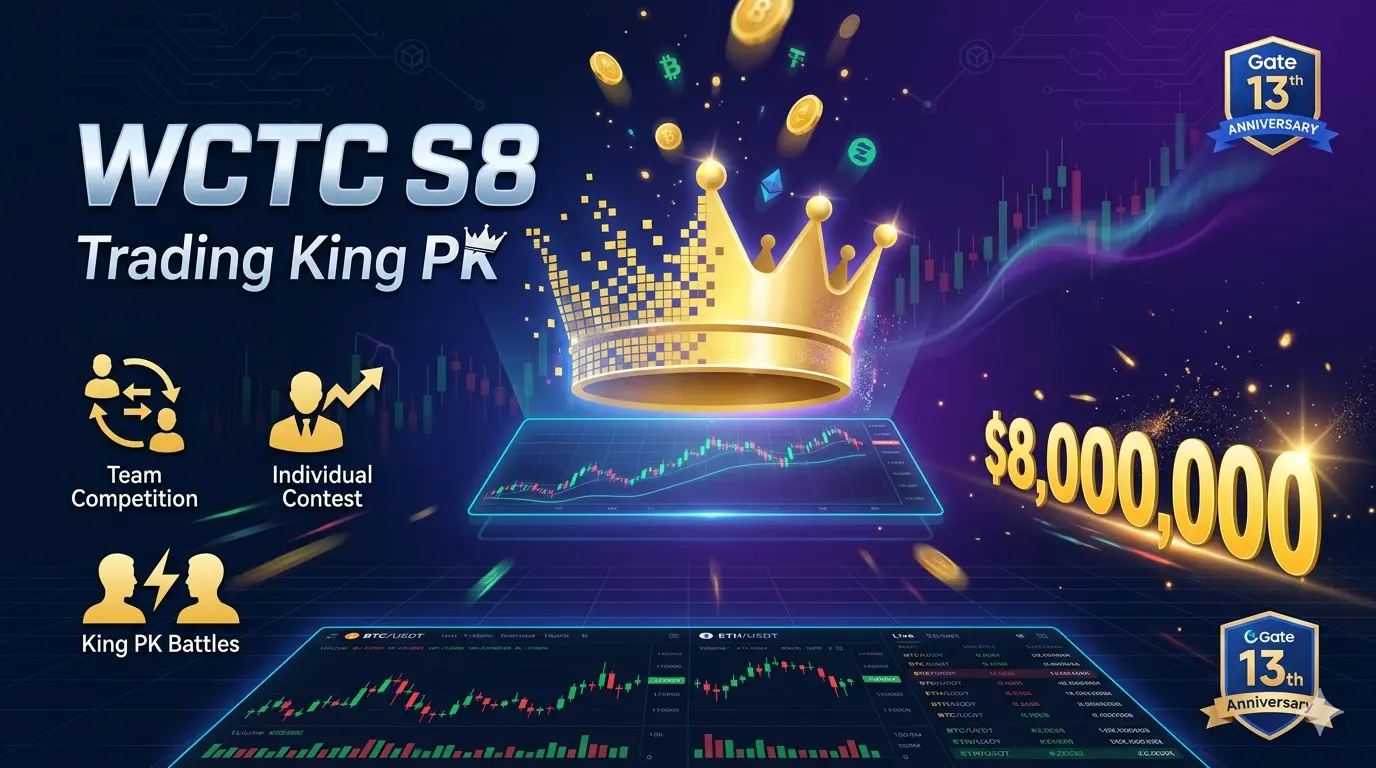
The World Crypto Trading Competition (WCTC) Season 8 is here, and it's bigger than ever. As Gate celebrates its 13th anniversary, this year's competition brings an unprecedented $8 million prize pool across multiple formats. Whether you're a seasoned trader or just getting started, there's something for everyone.
What is WCTC S8?
WCTC S8 is Gate's flagship global trading competition running from April 23 to May 20, 2026. This season introduces a multi-dimensional upgrade with three distinct competition tracks designed to test different trading skills and strategies.
The Three Competition Tracks
1. Team Competition - $3.6M Prize Pool
Join forces with fellow traders to compete as a team. The competition focuses on dual-dimensional metrics: trading volume and profit performance. Teams battle it out in two phases, with the first half already underway. Over 5,000 teams have already formed, creating an electrifying competitive atmosphere.
2. Individual Contest - $2M in Rewards
Go solo and prove your trading prowess. This track rewards individual traders based on their total trading volume across Spot, Futures, TradFi, ETF, Swap, and Copy Trading. The more you trade, the bigger your share of the prize pool.
3. King PK Battles - $1.6M Head-to-Head Pool
The most intense format yet. Engage in 1v1 trading battles where you directly compete against another trader. This head-to-head format tests not just your trading skills but your ability to outperform under pressure.
How to Participate
Registration is simple and open to all Gate users. New users receive a 20 USDT welcome bonus to get started. Teams can earn additional bonuses up to $3,000 with daily rewards distributed throughout the competition period.
Competition Period
- Start Date: April 23, 2026 at 16:00 UTC+8
- End Date: May 20, 2026 at 15:59 UTC+8
Why Join WCTC S8?
Massive Prize Pool: $8,000,000 USDT up for grabs - one of the largest trading competition prize pools in the industry.
Multiple Ways to Win: Whether you excel at team collaboration, individual strategy, or head-to-head battles, there's a track suited to your strengths.
Enhanced Competition System: This season features upgraded mechanics that balance competitiveness with accessibility, ensuring both professional traders and newcomers can participate meaningfully.
Global Recognition: Compete against traders worldwide and establish your reputation in the crypto trading community.
Bonus Incentives: Daily rewards, team bonuses, and new user bonuses add extra layers of earning potential beyond the main prize pools.
Trading Categories Included
Your trading activity across all major Gate products counts toward your competition performance:
- Spot Trading
- Futures Trading
- TradFi
- ETF Trading
- Swap
- Copy Trading
Tips for Success
1. Diversify Your Trading: Engage across multiple trading categories to maximize your volume and profit potential.
2. Team Strategy: If joining the team competition, coordinate with teammates to optimize collective performance.
3. Risk Management: While competition is fierce, smart risk management separates winners from those who burn out early.
4. Stay Active: Daily rewards mean consistent participation pays off, even if you're not leading the leaderboard.
5. **Learn and Adapt:** Watch how top performers navigate the markets and adapt your strategies accordingly.
13th Anniversary Celebrations
WCTC S8 is part of Gate's larger 13th anniversary celebration. The platform has planned exclusive offline events in Hong Kong, including the "GATE GALA 13" anniversary dinner and the "Gate 13 Blue Carpet Ceremony." These events bring together global partners, industry leaders, and top traders to celebrate this milestone.
Get Started Today
Don't miss your chance to be part of crypto trading history. With millions in prizes, global recognition, and the thrill of competition, WCTC S8 is the event of the year for crypto traders.
Join now and turn your trades into rewards. The competition is live, the prizes are waiting, and the only question is: Are you ready to claim your throne as the Trading King?
#WCTC #TradingKing #Gate13thAnniversary #CryptoTrading
repost-content-media
  • Reward
  • Comment
  • Repost
  • Share
#WCTCTradingKingPK 🏆 WCTC S8 Hot Discussion: Show Your Achievements, Win Luxurious Prizes
Post in the plaza to participate, WCTC limited edition peripherals, GT, coupons, and more await you!
🎁 Four Major Reward Tracks:
1️⃣ Team Gift: Share your team formation with one click, draw 100 people to win a $50 experience voucher.
2️⃣ Expert Gift: Write a strategy guide to win a $20 GT + official top placement.
3️⃣ War God Gift: Share screenshots of your personal PK battle results to receive a WCTC commemorative T-shirt.
4️⃣ Leader: Share your team’s performance, and the top 10 in popularity will wi
GT0.41%
Dubai_Prince
#WCTCTradingKingPK 🏆 WCTC S8 Hot Discussion: Show Your Achievements, Win Luxurious Prizes
Post in the plaza to participate, WCTC limited edition peripherals, GT, coupons, and more await you!
🎁 Four Major Reward Tracks:
1️⃣ Team Gift: Share your team formation with one click, draw 100 people to win a $50 experience voucher.
2️⃣ Expert Gift: Write a strategy guide to win a $20 GT + official top placement.
3️⃣ War God Gift: Share screenshots of your personal PK battle results to receive a WCTC commemorative T-shirt.
4️⃣ Leader: Share your team’s performance, and the top 10 in popularity will win full traffic promotion.
👉 Post with the topic #WCTC交易王PK to lock in your exclusive reward!
🔗 https://www.gate.com/competition/wctc-s8
Details: https://www.gate.com/announcements/article/50907
repost-content-media
  • Reward
  • Comment
  • Repost
  • Share
#CryptoMarketSeesVolatility : The Supply Squeeze Intensifies
Bitcoin is undergoing its most dramatic supply restructuring since2013. Large holders have accumulated270,000 BTC in just30 days—the largest monthly increase on record. Exchange reserves have collapsed to seven-year lows while long-term holders now command3.6 million BTC, representing a69% surge to2020 highs. This is not typical market behavior; it signals a fundamental power transfer from retail traders to institutional giants.
The demand side tells an equally compelling story. Spot ETFs absorbed nearly19,000 BTC over five days, nin
BTC0.25%
ETH0.34%
STX0.31%
MNT0.28%
Dubai_Prince
#CryptoMarketSeesVolatility : The Supply Squeeze Intensifies
Bitcoin is undergoing its most dramatic supply restructuring since2013. Large holders have accumulated270,000 BTC in just30 days—the largest monthly increase on record. Exchange reserves have collapsed to seven-year lows while long-term holders now command3.6 million BTC, representing a69% surge to2020 highs. This is not typical market behavior; it signals a fundamental power transfer from retail traders to institutional giants.
The demand side tells an equally compelling story. Spot ETFs absorbed nearly19,000 BTC over five days, nine times the newly mined supply. BlackRock and Strategy continue their relentless accumulation while sovereign entities, including the US military operating Bitcoin nodes, validate digital assets as strategic infrastructure. The proposed US strategic Bitcoin reserve marks a watershed moment in national asset allocation philosophy.
Market structure has evolved from liquidation-driven volatility to liquidity-dominated dynamics. Short-term holder pressure is dissipating as patient capital establishes dominance. Bitcoin Core privacy enhancements and Stacks ecosystem expansion, now boasting $305 million TVL with750+ AI agents active on-chain, demonstrate technological maturation beyond store-of-value narratives.
Ethereum mirrors this institutional conviction. Q12026 delivered200 million on-chain transactions with staking participation reaching32%—an unprecedented milestone. Bitmine alone stakes3.58 million ETH, representing72% of holdings, while the broader ecosystem demonstrated resilience through the KelpDAO incident. Aave's "DeFi United" initiative, with Lido, EtherFi, and Mantle contributing over40,000 ETH, showcased decentralized finance's collaborative risk management capabilities.
Technical innovation accelerates across both networks. Ethereum's EIP-8182 introduces privacy transfers, quantum-resistant upgrades are officially roadmapped, and MegaETH's April30th launch promises application-layer breakthroughs. Nine consecutive days of spot ETF inflows, including BlackRock's recent12,080 ETH transfer to Coinbase Prime, confirm institutional commitment.
Current Fear & Greed Index at31 reflects market anxiety, yet this often precedes accumulation phases. Bitcoin maintains stronger social sentiment with88 bullish versus36 bearish voices, while Ethereum shows52 bullish against22 bearish perspectives. These contrarian indicators deserve attention.
Price action reflects this tension. Bitcoin at $77,491 battles resistance at $78,479 with support at $77,265. Ethereum at $2,315 faces similar dynamics with resistance at $2,332 and support at $2,301. The narrow ranges suggest compression before potential expansion.
The macro backdrop amplifies these technical factors. Sovereign recognition, institutional adoption, and supply scarcity create a volatile but constructive foundation. When market sentiment eventually shifts from fear to optimism, the structural demand-supply imbalance could catalyze significant price movements.
For participants, this environment demands disciplined risk management. The convergence of institutional capital, technological advancement, and regulatory clarity rewards long-term positioning over short-term speculation. Patience and appropriate sizing matter more than timing perfection.
The cryptocurrency market is maturing before our eyes. What began as a speculative experiment now attracts sovereign wealth, corporate treasuries, and traditional finance infrastructure. The volatility we experience today reflects this transition—a bridge between fringe technology and mainstream asset class.
Understanding these dynamics separates informed participants from reactive traders. The data clearly shows accumulation by sophisticated entities during periods of retail uncertainty. This pattern has historically preceded major advances.
As we navigate this volatile phase, remember that market structure has fundamentally changed. The players are different, the stakes are higher, and the timeline has extended. Short-term price swings matter less than the underlying trend toward institutional adoption and supply scarcity.
The question is not whether volatility will persist—it will. The question is whether your positioning aligns with the structural forces reshaping this market. Evidence suggests patient, institutionally-aligned strategies outperform reactive approaches in this environment.
Stay informed, stay disciplined, and remember that volatility creates opportunity for those prepared to seize it.
#CryptoMarket #BitcoinAnalysis #EthereumUpdate #MarketVolatility
repost-content-media
  • Reward
  • 1
  • Repost
  • Share
CryptoDiscovery:
To The Moon 🌕
#CryptoMarketSeesVolatility : The Supply Squeeze Intensifies
Bitcoin is undergoing its most dramatic supply restructuring since2013. Large holders have accumulated270,000 BTC in just30 days—the largest monthly increase on record. Exchange reserves have collapsed to seven-year lows while long-term holders now command3.6 million BTC, representing a69% surge to2020 highs. This is not typical market behavior; it signals a fundamental power transfer from retail traders to institutional giants.
The demand side tells an equally compelling story. Spot ETFs absorbed nearly19,000 BTC over five days, nin
BTC0.25%
ETH0.34%
STX0.31%
MNT0.28%
Dubai_Prince
#CryptoMarketSeesVolatility : The Supply Squeeze Intensifies
Bitcoin is undergoing its most dramatic supply restructuring since2013. Large holders have accumulated270,000 BTC in just30 days—the largest monthly increase on record. Exchange reserves have collapsed to seven-year lows while long-term holders now command3.6 million BTC, representing a69% surge to2020 highs. This is not typical market behavior; it signals a fundamental power transfer from retail traders to institutional giants.
The demand side tells an equally compelling story. Spot ETFs absorbed nearly19,000 BTC over five days, nine times the newly mined supply. BlackRock and Strategy continue their relentless accumulation while sovereign entities, including the US military operating Bitcoin nodes, validate digital assets as strategic infrastructure. The proposed US strategic Bitcoin reserve marks a watershed moment in national asset allocation philosophy.
Market structure has evolved from liquidation-driven volatility to liquidity-dominated dynamics. Short-term holder pressure is dissipating as patient capital establishes dominance. Bitcoin Core privacy enhancements and Stacks ecosystem expansion, now boasting $305 million TVL with750+ AI agents active on-chain, demonstrate technological maturation beyond store-of-value narratives.
Ethereum mirrors this institutional conviction. Q12026 delivered200 million on-chain transactions with staking participation reaching32%—an unprecedented milestone. Bitmine alone stakes3.58 million ETH, representing72% of holdings, while the broader ecosystem demonstrated resilience through the KelpDAO incident. Aave's "DeFi United" initiative, with Lido, EtherFi, and Mantle contributing over40,000 ETH, showcased decentralized finance's collaborative risk management capabilities.
Technical innovation accelerates across both networks. Ethereum's EIP-8182 introduces privacy transfers, quantum-resistant upgrades are officially roadmapped, and MegaETH's April30th launch promises application-layer breakthroughs. Nine consecutive days of spot ETF inflows, including BlackRock's recent12,080 ETH transfer to Coinbase Prime, confirm institutional commitment.
Current Fear & Greed Index at31 reflects market anxiety, yet this often precedes accumulation phases. Bitcoin maintains stronger social sentiment with88 bullish versus36 bearish voices, while Ethereum shows52 bullish against22 bearish perspectives. These contrarian indicators deserve attention.
Price action reflects this tension. Bitcoin at $77,491 battles resistance at $78,479 with support at $77,265. Ethereum at $2,315 faces similar dynamics with resistance at $2,332 and support at $2,301. The narrow ranges suggest compression before potential expansion.
The macro backdrop amplifies these technical factors. Sovereign recognition, institutional adoption, and supply scarcity create a volatile but constructive foundation. When market sentiment eventually shifts from fear to optimism, the structural demand-supply imbalance could catalyze significant price movements.
For participants, this environment demands disciplined risk management. The convergence of institutional capital, technological advancement, and regulatory clarity rewards long-term positioning over short-term speculation. Patience and appropriate sizing matter more than timing perfection.
The cryptocurrency market is maturing before our eyes. What began as a speculative experiment now attracts sovereign wealth, corporate treasuries, and traditional finance infrastructure. The volatility we experience today reflects this transition—a bridge between fringe technology and mainstream asset class.
Understanding these dynamics separates informed participants from reactive traders. The data clearly shows accumulation by sophisticated entities during periods of retail uncertainty. This pattern has historically preceded major advances.
As we navigate this volatile phase, remember that market structure has fundamentally changed. The players are different, the stakes are higher, and the timeline has extended. Short-term price swings matter less than the underlying trend toward institutional adoption and supply scarcity.
The question is not whether volatility will persist—it will. The question is whether your positioning aligns with the structural forces reshaping this market. Evidence suggests patient, institutionally-aligned strategies outperform reactive approaches in this environment.
Stay informed, stay disciplined, and remember that volatility creates opportunity for those prepared to seize it.
#CryptoMarket #BitcoinAnalysis #EthereumUpdate #MarketVolatility
repost-content-media
  • Reward
  • Comment
  • Repost
  • Share
#CryptoMarketSeesVolatility : The Supply Squeeze Intensifies
Bitcoin is undergoing its most dramatic supply restructuring since2013. Large holders have accumulated270,000 BTC in just30 days—the largest monthly increase on record. Exchange reserves have collapsed to seven-year lows while long-term holders now command3.6 million BTC, representing a69% surge to2020 highs. This is not typical market behavior; it signals a fundamental power transfer from retail traders to institutional giants.
The demand side tells an equally compelling story. Spot ETFs absorbed nearly19,000 BTC over five days, nin
BTC0.25%
ETH0.34%
STX0.31%
MNT0.28%
Dubai_Prince
#CryptoMarketSeesVolatility : The Supply Squeeze Intensifies
Bitcoin is undergoing its most dramatic supply restructuring since2013. Large holders have accumulated270,000 BTC in just30 days—the largest monthly increase on record. Exchange reserves have collapsed to seven-year lows while long-term holders now command3.6 million BTC, representing a69% surge to2020 highs. This is not typical market behavior; it signals a fundamental power transfer from retail traders to institutional giants.
The demand side tells an equally compelling story. Spot ETFs absorbed nearly19,000 BTC over five days, nine times the newly mined supply. BlackRock and Strategy continue their relentless accumulation while sovereign entities, including the US military operating Bitcoin nodes, validate digital assets as strategic infrastructure. The proposed US strategic Bitcoin reserve marks a watershed moment in national asset allocation philosophy.
Market structure has evolved from liquidation-driven volatility to liquidity-dominated dynamics. Short-term holder pressure is dissipating as patient capital establishes dominance. Bitcoin Core privacy enhancements and Stacks ecosystem expansion, now boasting $305 million TVL with750+ AI agents active on-chain, demonstrate technological maturation beyond store-of-value narratives.
Ethereum mirrors this institutional conviction. Q12026 delivered200 million on-chain transactions with staking participation reaching32%—an unprecedented milestone. Bitmine alone stakes3.58 million ETH, representing72% of holdings, while the broader ecosystem demonstrated resilience through the KelpDAO incident. Aave's "DeFi United" initiative, with Lido, EtherFi, and Mantle contributing over40,000 ETH, showcased decentralized finance's collaborative risk management capabilities.
Technical innovation accelerates across both networks. Ethereum's EIP-8182 introduces privacy transfers, quantum-resistant upgrades are officially roadmapped, and MegaETH's April30th launch promises application-layer breakthroughs. Nine consecutive days of spot ETF inflows, including BlackRock's recent12,080 ETH transfer to Coinbase Prime, confirm institutional commitment.
Current Fear & Greed Index at31 reflects market anxiety, yet this often precedes accumulation phases. Bitcoin maintains stronger social sentiment with88 bullish versus36 bearish voices, while Ethereum shows52 bullish against22 bearish perspectives. These contrarian indicators deserve attention.
Price action reflects this tension. Bitcoin at $77,491 battles resistance at $78,479 with support at $77,265. Ethereum at $2,315 faces similar dynamics with resistance at $2,332 and support at $2,301. The narrow ranges suggest compression before potential expansion.
The macro backdrop amplifies these technical factors. Sovereign recognition, institutional adoption, and supply scarcity create a volatile but constructive foundation. When market sentiment eventually shifts from fear to optimism, the structural demand-supply imbalance could catalyze significant price movements.
For participants, this environment demands disciplined risk management. The convergence of institutional capital, technological advancement, and regulatory clarity rewards long-term positioning over short-term speculation. Patience and appropriate sizing matter more than timing perfection.
The cryptocurrency market is maturing before our eyes. What began as a speculative experiment now attracts sovereign wealth, corporate treasuries, and traditional finance infrastructure. The volatility we experience today reflects this transition—a bridge between fringe technology and mainstream asset class.
Understanding these dynamics separates informed participants from reactive traders. The data clearly shows accumulation by sophisticated entities during periods of retail uncertainty. This pattern has historically preceded major advances.
As we navigate this volatile phase, remember that market structure has fundamentally changed. The players are different, the stakes are higher, and the timeline has extended. Short-term price swings matter less than the underlying trend toward institutional adoption and supply scarcity.
The question is not whether volatility will persist—it will. The question is whether your positioning aligns with the structural forces reshaping this market. Evidence suggests patient, institutionally-aligned strategies outperform reactive approaches in this environment.
Stay informed, stay disciplined, and remember that volatility creates opportunity for those prepared to seize it.
#CryptoMarket #BitcoinAnalysis #EthereumUpdate #MarketVolatility
repost-content-media
  • Reward
  • Comment
  • Repost
  • Share
#rsETHAttackUpdate : Technical Analysis of DeFi's Largest Cross-Chain Attack
On April18,2026, KelpDAO's rsETH protocol suffered a $292 million exploit through its LayerZero bridge, marking one of DeFi's most significant security failures. This briefing examines the attack vectors, cascading effects, and structural vulnerabilities exposed.
Attack Overview
The attacker minted116,500 unbacked rsETH tokens (18% of total supply) by compromising KelpDAO's cross-chain infrastructure. The exploit targeted a critical architectural weakness: KelpDAO's bridge operated with a1-of-1 DVN (Decentralized Vali
ZRO-0.28%
AAVE0.23%
ETH0.34%
ARB-2.5%
Dubai_Prince
#rsETHAttackUpdate : Technical Analysis of DeFi's Largest Cross-Chain Attack
On April18,2026, KelpDAO's rsETH protocol suffered a $292 million exploit through its LayerZero bridge, marking one of DeFi's most significant security failures. This briefing examines the attack vectors, cascading effects, and structural vulnerabilities exposed.
Attack Overview
The attacker minted116,500 unbacked rsETH tokens (18% of total supply) by compromising KelpDAO's cross-chain infrastructure. The exploit targeted a critical architectural weakness: KelpDAO's bridge operated with a1-of-1 DVN (Decentralized Validator Network) configuration, making LayerZero Labs the sole verification entity for cross-chain messages.
Technical Execution
The attack followed a sophisticated multi-phase approach:
1. Infrastructure Penetration: Attackers gained access to RPC nodes used by the LayerZero DVN, replacing legitimate op-geth binaries with malicious versions that served forged data exclusively to the DVN's IP addresses.
2. Traffic Manipulation: Through DDoS attacks on clean nodes, attackers forced complete failover to compromised infrastructure, ensuring all verification traffic routed through poisoned endpoints.
3. Message Forgery: A fabricated cross-chain message claiming origin from KelpDAO's Unichain deployment was validated against manipulated on-chain state, passing the2-of-3 multisig quorum.
4. Token Extraction: The bridge released116,500 rsETH to attacker-controlled addresses in a single transaction, creating unbacked tokens with no underlying collateral.
Attribution analysis points to North Korea's Lazarus Group (TraderTraitor), known for advanced cryptocurrency exploits targeting financial infrastructure.
Financial Cascading Effects
The attacker immediately deployed unbacked rsETH as collateral across Aave V3 and V4 markets:
- Borrowed52,834 WETH on Ethereum mainnet
- Borrowed29,782 WETH plus821 wstETH on Arbitrum
- Total extraction: approximately83,427 WETH and wstETHThis created substantial bad debt within Aave's lending markets. The protocol responded within hours by freezing rsETH markets and removing borrowing power, but damage extended across DeFi:
- Over $7 billion withdrawn from leading protocols
- Aave lost $6.2 billion (23% of TVL)
- Similar outflows hit Morpho, Sky, and Jupiter Lend
- Panic withdrawals affected even unaffected protocols on Solana Emergency Responses
Multiple protocols and networks implemented damage control measures:
- KelpDAO paused rsETH contracts across mainnet and L2s
- Arbitrum froze30,000 ETH ($71 million) linked to exploit addresses
- Tether froze $344 million USDT across two Tron wallets
- Aave community initiated discussions on permanent rsETH delisting Structural Vulnerabilities Exposed
The exploit reveals fundamental weaknesses in DeFi's cross-chain architecture:
Centralized Validation: Despite decentralization marketing, bridges often rely on concentrated verification. The1-of-1 DVN configuration created a catastrophic single point of failure.
Trust Boundary Failures: The exploit occurred at LayerZero's message verification and KelpDAO's bridge acceptance intersection, demonstrating how modular security without robust standards creates systemic risk.
Composability Amplification: Attackers leveraged unbacked tokens across multiple protocols, showing how DeFi's interconnected nature magnifies individual failures.
Governance Reality Gap: DeFi operates where theoretical decentralization masks practical control concentration, complicating accountability and emergency response.
Industry Implications
This incident carries significant consequences for DeFi development:
Security Standards: Cross-chain bridges require distributed validation mechanisms and elimination of single points of failure. The industry must establish minimum security standards for bridge architecture.
Risk Assessment: Lending protocols need real-time collateral verification and stricter assessment of bridged asset backing before accepting deposits.
Emergency Protocols: Rapid market freezing capabilities are essential, but reactive measures cannot substitute for preventive security architecture.
Regulatory Scrutiny: Exploits of this scale accelerate regulatory attention and compliance pressure on DeFi protocols.
Accounting Challenges: Auditors face fundamental difficulties evaluating control effectiveness when validation relies on potentially compromised off-chain infrastructure.
Key Lessons
For developers and participants:
1. Bridge security architecture demands multi-signature distributed validation, not single-entity verification.
2. Collateral backing must be verifiable in real-time, particularly for cross-chain assets.
3. Protocol composability creates systemic risk requiring comprehensive security assessment.
4. Emergency response capabilities must be balanced with preventive security measures.
5. Due diligence on underlying infrastructure security is essential before depositing funds.
Conclusion
The rsETH exploit demonstrates that in DeFi, bridge design inseparably determines asset security. Distribution across chains does not distribute risk automatically. This incident exposes the tension between rapid scalability and robust security architecture that defines DeFi's current evolution.
The attack reveals a fundamental truth: decentralized governance in theory often masks concentrated control in practice. For DeFi to achieve resilient financial infrastructure, the industry must address these architectural vulnerabilities through stronger standards, distributed validation mechanisms, and protocols prioritizing security over deployment speed.
The cascading effects across Aave and other protocols show how quickly individual bridge failures become systemic crises. As DeFi matures, cross-chain security must evolve from an afterthought to a foundational design principle.
Preliminary attribution to state-sponsored actors adds geopolitical dimension to DeFi security challenges. The sophistication demonstrated suggests future attacks may increase in complexity and impact, making proactive security investment essential for protocol survival.
This incident will likely accelerate development of more resilient cross-chain solutions while prompting comprehensive reassessment of bridge-related risk exposure across the DeFi ecosystem. The question is no longer whether bridges can be secured, but whether the industry can implement adequate security standards before the next exploit occurs.
#rsETHExploit #DeFiSecurity #CrossChainRisk #KelpDAOHack
repost-content-media
  • Reward
  • Comment
  • Repost
  • Share
#rsETHAttackUpdate : Technical Analysis of DeFi's Largest Cross-Chain Attack
On April18,2026, KelpDAO's rsETH protocol suffered a $292 million exploit through its LayerZero bridge, marking one of DeFi's most significant security failures. This briefing examines the attack vectors, cascading effects, and structural vulnerabilities exposed.
Attack Overview
The attacker minted116,500 unbacked rsETH tokens (18% of total supply) by compromising KelpDAO's cross-chain infrastructure. The exploit targeted a critical architectural weakness: KelpDAO's bridge operated with a1-of-1 DVN (Decentralized Vali
ZRO-0.28%
AAVE0.23%
ETH0.34%
ARB-2.5%
Dubai_Prince
#rsETHAttackUpdate : Technical Analysis of DeFi's Largest Cross-Chain Attack
On April18,2026, KelpDAO's rsETH protocol suffered a $292 million exploit through its LayerZero bridge, marking one of DeFi's most significant security failures. This briefing examines the attack vectors, cascading effects, and structural vulnerabilities exposed.
Attack Overview
The attacker minted116,500 unbacked rsETH tokens (18% of total supply) by compromising KelpDAO's cross-chain infrastructure. The exploit targeted a critical architectural weakness: KelpDAO's bridge operated with a1-of-1 DVN (Decentralized Validator Network) configuration, making LayerZero Labs the sole verification entity for cross-chain messages.
Technical Execution
The attack followed a sophisticated multi-phase approach:
1. Infrastructure Penetration: Attackers gained access to RPC nodes used by the LayerZero DVN, replacing legitimate op-geth binaries with malicious versions that served forged data exclusively to the DVN's IP addresses.
2. Traffic Manipulation: Through DDoS attacks on clean nodes, attackers forced complete failover to compromised infrastructure, ensuring all verification traffic routed through poisoned endpoints.
3. Message Forgery: A fabricated cross-chain message claiming origin from KelpDAO's Unichain deployment was validated against manipulated on-chain state, passing the2-of-3 multisig quorum.
4. Token Extraction: The bridge released116,500 rsETH to attacker-controlled addresses in a single transaction, creating unbacked tokens with no underlying collateral.
Attribution analysis points to North Korea's Lazarus Group (TraderTraitor), known for advanced cryptocurrency exploits targeting financial infrastructure.
Financial Cascading Effects
The attacker immediately deployed unbacked rsETH as collateral across Aave V3 and V4 markets:
- Borrowed52,834 WETH on Ethereum mainnet
- Borrowed29,782 WETH plus821 wstETH on Arbitrum
- Total extraction: approximately83,427 WETH and wstETHThis created substantial bad debt within Aave's lending markets. The protocol responded within hours by freezing rsETH markets and removing borrowing power, but damage extended across DeFi:
- Over $7 billion withdrawn from leading protocols
- Aave lost $6.2 billion (23% of TVL)
- Similar outflows hit Morpho, Sky, and Jupiter Lend
- Panic withdrawals affected even unaffected protocols on Solana Emergency Responses
Multiple protocols and networks implemented damage control measures:
- KelpDAO paused rsETH contracts across mainnet and L2s
- Arbitrum froze30,000 ETH ($71 million) linked to exploit addresses
- Tether froze $344 million USDT across two Tron wallets
- Aave community initiated discussions on permanent rsETH delisting Structural Vulnerabilities Exposed
The exploit reveals fundamental weaknesses in DeFi's cross-chain architecture:
Centralized Validation: Despite decentralization marketing, bridges often rely on concentrated verification. The1-of-1 DVN configuration created a catastrophic single point of failure.
Trust Boundary Failures: The exploit occurred at LayerZero's message verification and KelpDAO's bridge acceptance intersection, demonstrating how modular security without robust standards creates systemic risk.
Composability Amplification: Attackers leveraged unbacked tokens across multiple protocols, showing how DeFi's interconnected nature magnifies individual failures.
Governance Reality Gap: DeFi operates where theoretical decentralization masks practical control concentration, complicating accountability and emergency response.
Industry Implications
This incident carries significant consequences for DeFi development:
Security Standards: Cross-chain bridges require distributed validation mechanisms and elimination of single points of failure. The industry must establish minimum security standards for bridge architecture.
Risk Assessment: Lending protocols need real-time collateral verification and stricter assessment of bridged asset backing before accepting deposits.
Emergency Protocols: Rapid market freezing capabilities are essential, but reactive measures cannot substitute for preventive security architecture.
Regulatory Scrutiny: Exploits of this scale accelerate regulatory attention and compliance pressure on DeFi protocols.
Accounting Challenges: Auditors face fundamental difficulties evaluating control effectiveness when validation relies on potentially compromised off-chain infrastructure.
Key Lessons
For developers and participants:
1. Bridge security architecture demands multi-signature distributed validation, not single-entity verification.
2. Collateral backing must be verifiable in real-time, particularly for cross-chain assets.
3. Protocol composability creates systemic risk requiring comprehensive security assessment.
4. Emergency response capabilities must be balanced with preventive security measures.
5. Due diligence on underlying infrastructure security is essential before depositing funds.
Conclusion
The rsETH exploit demonstrates that in DeFi, bridge design inseparably determines asset security. Distribution across chains does not distribute risk automatically. This incident exposes the tension between rapid scalability and robust security architecture that defines DeFi's current evolution.
The attack reveals a fundamental truth: decentralized governance in theory often masks concentrated control in practice. For DeFi to achieve resilient financial infrastructure, the industry must address these architectural vulnerabilities through stronger standards, distributed validation mechanisms, and protocols prioritizing security over deployment speed.
The cascading effects across Aave and other protocols show how quickly individual bridge failures become systemic crises. As DeFi matures, cross-chain security must evolve from an afterthought to a foundational design principle.
Preliminary attribution to state-sponsored actors adds geopolitical dimension to DeFi security challenges. The sophistication demonstrated suggests future attacks may increase in complexity and impact, making proactive security investment essential for protocol survival.
This incident will likely accelerate development of more resilient cross-chain solutions while prompting comprehensive reassessment of bridge-related risk exposure across the DeFi ecosystem. The question is no longer whether bridges can be secured, but whether the industry can implement adequate security standards before the next exploit occurs.
#rsETHExploit #DeFiSecurity #CrossChainRisk #KelpDAOHack
repost-content-media
  • Reward
  • Comment
  • Repost
  • Share
#rsETHAttackUpdate : Technical Analysis of DeFi's Largest Cross-Chain Attack
On April18,2026, KelpDAO's rsETH protocol suffered a $292 million exploit through its LayerZero bridge, marking one of DeFi's most significant security failures. This briefing examines the attack vectors, cascading effects, and structural vulnerabilities exposed.
Attack Overview
The attacker minted116,500 unbacked rsETH tokens (18% of total supply) by compromising KelpDAO's cross-chain infrastructure. The exploit targeted a critical architectural weakness: KelpDAO's bridge operated with a1-of-1 DVN (Decentralized Vali
ZRO-0.28%
AAVE0.23%
ETH0.34%
ARB-2.5%
Dubai_Prince
#rsETHAttackUpdate : Technical Analysis of DeFi's Largest Cross-Chain Attack
On April18,2026, KelpDAO's rsETH protocol suffered a $292 million exploit through its LayerZero bridge, marking one of DeFi's most significant security failures. This briefing examines the attack vectors, cascading effects, and structural vulnerabilities exposed.
Attack Overview
The attacker minted116,500 unbacked rsETH tokens (18% of total supply) by compromising KelpDAO's cross-chain infrastructure. The exploit targeted a critical architectural weakness: KelpDAO's bridge operated with a1-of-1 DVN (Decentralized Validator Network) configuration, making LayerZero Labs the sole verification entity for cross-chain messages.
Technical Execution
The attack followed a sophisticated multi-phase approach:
1. Infrastructure Penetration: Attackers gained access to RPC nodes used by the LayerZero DVN, replacing legitimate op-geth binaries with malicious versions that served forged data exclusively to the DVN's IP addresses.
2. Traffic Manipulation: Through DDoS attacks on clean nodes, attackers forced complete failover to compromised infrastructure, ensuring all verification traffic routed through poisoned endpoints.
3. Message Forgery: A fabricated cross-chain message claiming origin from KelpDAO's Unichain deployment was validated against manipulated on-chain state, passing the2-of-3 multisig quorum.
4. Token Extraction: The bridge released116,500 rsETH to attacker-controlled addresses in a single transaction, creating unbacked tokens with no underlying collateral.
Attribution analysis points to North Korea's Lazarus Group (TraderTraitor), known for advanced cryptocurrency exploits targeting financial infrastructure.
Financial Cascading Effects
The attacker immediately deployed unbacked rsETH as collateral across Aave V3 and V4 markets:
- Borrowed52,834 WETH on Ethereum mainnet
- Borrowed29,782 WETH plus821 wstETH on Arbitrum
- Total extraction: approximately83,427 WETH and wstETHThis created substantial bad debt within Aave's lending markets. The protocol responded within hours by freezing rsETH markets and removing borrowing power, but damage extended across DeFi:
- Over $7 billion withdrawn from leading protocols
- Aave lost $6.2 billion (23% of TVL)
- Similar outflows hit Morpho, Sky, and Jupiter Lend
- Panic withdrawals affected even unaffected protocols on Solana Emergency Responses
Multiple protocols and networks implemented damage control measures:
- KelpDAO paused rsETH contracts across mainnet and L2s
- Arbitrum froze30,000 ETH ($71 million) linked to exploit addresses
- Tether froze $344 million USDT across two Tron wallets
- Aave community initiated discussions on permanent rsETH delisting Structural Vulnerabilities Exposed
The exploit reveals fundamental weaknesses in DeFi's cross-chain architecture:
Centralized Validation: Despite decentralization marketing, bridges often rely on concentrated verification. The1-of-1 DVN configuration created a catastrophic single point of failure.
Trust Boundary Failures: The exploit occurred at LayerZero's message verification and KelpDAO's bridge acceptance intersection, demonstrating how modular security without robust standards creates systemic risk.
Composability Amplification: Attackers leveraged unbacked tokens across multiple protocols, showing how DeFi's interconnected nature magnifies individual failures.
Governance Reality Gap: DeFi operates where theoretical decentralization masks practical control concentration, complicating accountability and emergency response.
Industry Implications
This incident carries significant consequences for DeFi development:
Security Standards: Cross-chain bridges require distributed validation mechanisms and elimination of single points of failure. The industry must establish minimum security standards for bridge architecture.
Risk Assessment: Lending protocols need real-time collateral verification and stricter assessment of bridged asset backing before accepting deposits.
Emergency Protocols: Rapid market freezing capabilities are essential, but reactive measures cannot substitute for preventive security architecture.
Regulatory Scrutiny: Exploits of this scale accelerate regulatory attention and compliance pressure on DeFi protocols.
Accounting Challenges: Auditors face fundamental difficulties evaluating control effectiveness when validation relies on potentially compromised off-chain infrastructure.
Key Lessons
For developers and participants:
1. Bridge security architecture demands multi-signature distributed validation, not single-entity verification.
2. Collateral backing must be verifiable in real-time, particularly for cross-chain assets.
3. Protocol composability creates systemic risk requiring comprehensive security assessment.
4. Emergency response capabilities must be balanced with preventive security measures.
5. Due diligence on underlying infrastructure security is essential before depositing funds.
Conclusion
The rsETH exploit demonstrates that in DeFi, bridge design inseparably determines asset security. Distribution across chains does not distribute risk automatically. This incident exposes the tension between rapid scalability and robust security architecture that defines DeFi's current evolution.
The attack reveals a fundamental truth: decentralized governance in theory often masks concentrated control in practice. For DeFi to achieve resilient financial infrastructure, the industry must address these architectural vulnerabilities through stronger standards, distributed validation mechanisms, and protocols prioritizing security over deployment speed.
The cascading effects across Aave and other protocols show how quickly individual bridge failures become systemic crises. As DeFi matures, cross-chain security must evolve from an afterthought to a foundational design principle.
Preliminary attribution to state-sponsored actors adds geopolitical dimension to DeFi security challenges. The sophistication demonstrated suggests future attacks may increase in complexity and impact, making proactive security investment essential for protocol survival.
This incident will likely accelerate development of more resilient cross-chain solutions while prompting comprehensive reassessment of bridge-related risk exposure across the DeFi ecosystem. The question is no longer whether bridges can be secured, but whether the industry can implement adequate security standards before the next exploit occurs.
#rsETHExploit #DeFiSecurity #CrossChainRisk #KelpDAOHack
repost-content-media
  • Reward
  • 1
  • Repost
  • Share
CryptoDiscovery:
To The Moon 🌕
#rsETHAttackUpdate : Technical Analysis of DeFi's Largest Cross-Chain Attack
On April18,2026, KelpDAO's rsETH protocol suffered a $292 million exploit through its LayerZero bridge, marking one of DeFi's most significant security failures. This briefing examines the attack vectors, cascading effects, and structural vulnerabilities exposed.
Attack Overview
The attacker minted116,500 unbacked rsETH tokens (18% of total supply) by compromising KelpDAO's cross-chain infrastructure. The exploit targeted a critical architectural weakness: KelpDAO's bridge operated with a1-of-1 DVN (Decentralized Vali
ETH0.34%
AAVE0.23%
ARB-2.5%
MORPHO-1.29%
Dubai_Prince
#rsETHAttackUpdate : Technical Analysis of DeFi's Largest Cross-Chain Attack
On April18,2026, KelpDAO's rsETH protocol suffered a $292 million exploit through its LayerZero bridge, marking one of DeFi's most significant security failures. This briefing examines the attack vectors, cascading effects, and structural vulnerabilities exposed.
Attack Overview
The attacker minted116,500 unbacked rsETH tokens (18% of total supply) by compromising KelpDAO's cross-chain infrastructure. The exploit targeted a critical architectural weakness: KelpDAO's bridge operated with a1-of-1 DVN (Decentralized Validator Network) configuration, making LayerZero Labs the sole verification entity for cross-chain messages.
Technical Execution
The attack followed a sophisticated multi-phase approach:
1. Infrastructure Penetration: Attackers gained access to RPC nodes used by the LayerZero DVN, replacing legitimate op-geth binaries with malicious versions that served forged data exclusively to the DVN's IP addresses.
2. Traffic Manipulation: Through DDoS attacks on clean nodes, attackers forced complete failover to compromised infrastructure, ensuring all verification traffic routed through poisoned endpoints.
3. Message Forgery: A fabricated cross-chain message claiming origin from KelpDAO's Unichain deployment was validated against manipulated on-chain state, passing the2-of-3 multisig quorum.
4. Token Extraction: The bridge released116,500 rsETH to attacker-controlled addresses in a single transaction, creating unbacked tokens with no underlying collateral.
Attribution analysis points to North Korea's Lazarus Group (TraderTraitor), known for advanced cryptocurrency exploits targeting financial infrastructure.
Financial Cascading Effects
The attacker immediately deployed unbacked rsETH as collateral across Aave V3 and V4 markets:
- Borrowed52,834 WETH on Ethereum mainnet
- Borrowed29,782 WETH plus821 wstETH on Arbitrum
- Total extraction: approximately83,427 WETH and wstETHThis created substantial bad debt within Aave's lending markets. The protocol responded within hours by freezing rsETH markets and removing borrowing power, but damage extended across DeFi:
- Over $7 billion withdrawn from leading protocols
- Aave lost $6.2 billion (23% of TVL)
- Similar outflows hit Morpho, Sky, and Jupiter Lend
- Panic withdrawals affected even unaffected protocols on Solana Emergency Responses
Multiple protocols and networks implemented damage control measures:
- KelpDAO paused rsETH contracts across mainnet and L2s
- Arbitrum froze30,000 ETH ($71 million) linked to exploit addresses
- Tether froze $344 million USDT across two Tron wallets
- Aave community initiated discussions on permanent rsETH delisting Structural Vulnerabilities Exposed
The exploit reveals fundamental weaknesses in DeFi's cross-chain architecture:
Centralized Validation: Despite decentralization marketing, bridges often rely on concentrated verification. The1-of-1 DVN configuration created a catastrophic single point of failure.
Trust Boundary Failures: The exploit occurred at LayerZero's message verification and KelpDAO's bridge acceptance intersection, demonstrating how modular security without robust standards creates systemic risk.
Composability Amplification: Attackers leveraged unbacked tokens across multiple protocols, showing how DeFi's interconnected nature magnifies individual failures.
Governance Reality Gap: DeFi operates where theoretical decentralization masks practical control concentration, complicating accountability and emergency response.
Industry Implications
This incident carries significant consequences for DeFi development:
Security Standards: Cross-chain bridges require distributed validation mechanisms and elimination of single points of failure. The industry must establish minimum security standards for bridge architecture.
Risk Assessment: Lending protocols need real-time collateral verification and stricter assessment of bridged asset backing before accepting deposits.
Emergency Protocols: Rapid market freezing capabilities are essential, but reactive measures cannot substitute for preventive security architecture.
Regulatory Scrutiny: Exploits of this scale accelerate regulatory attention and compliance pressure on DeFi protocols.
Accounting Challenges: Auditors face fundamental difficulties evaluating control effectiveness when validation relies on potentially compromised off-chain infrastructure.
Key Lessons
For developers and participants:
1. Bridge security architecture demands multi-signature distributed validation, not single-entity verification.
2. Collateral backing must be verifiable in real-time, particularly for cross-chain assets.
3. Protocol composability creates systemic risk requiring comprehensive security assessment.
4. Emergency response capabilities must be balanced with preventive security measures.
5. Due diligence on underlying infrastructure security is essential before depositing funds.
Conclusion
The rsETH exploit demonstrates that in DeFi, bridge design inseparably determines asset security. Distribution across chains does not distribute risk automatically. This incident exposes the tension between rapid scalability and robust security architecture that defines DeFi's current evolution.
The attack reveals a fundamental truth: decentralized governance in theory often masks concentrated control in practice. For DeFi to achieve resilient financial infrastructure, the industry must address these architectural vulnerabilities through stronger standards, distributed validation mechanisms, and protocols prioritizing security over deployment speed.
The cascading effects across Aave and other protocols show how quickly individual bridge failures become systemic crises. As DeFi matures, cross-chain security must evolve from an afterthought to a foundational design principle.
Preliminary attribution to state-sponsored actors adds geopolitical dimension to DeFi security challenges. The sophistication demonstrated suggests future attacks may increase in complexity and impact, making proactive security investment essential for protocol survival.
This incident will likely accelerate development of more resilient cross-chain solutions while prompting comprehensive reassessment of bridge-related risk exposure across the DeFi ecosystem. The question is no longer whether bridges can be secured, but whether the industry can implement adequate security standards before the next exploit occurs.
#rsETHExploit #DeFiSecurity #CrossChainRisk #KelpDAOHack
repost-content-media
  • Reward
  • 1
  • Repost
  • Share
GateUser-6e4bcd15:
hallo bro and sister and the other day of school and the other day and the rest of us are going to the other day and the rest of us have a great time⌚
  • Pin