SLIM vs ETC: Comparing Two Cutting-Edge Weight Loss Approaches for Optimal Results

10-14-2025, 12:33:20 AM
Altcoins
Blockchain
DeFi
Ethereum
Solana
Article Rating : 3.3
0 ratings
This article offers a comprehensive comparison between Solanium (SLIM) and Ethereum Classic (ETC), exploring their historical price trends, supply mechanisms, institutional adoption, and ecosystem development. It provides insights into which cryptocurrency might be the better investment at present, catering to both new and experienced investors. Key insights include price forecasts up to 2030, investment strategy recommendations, and an analysis of potential risks. Readers will gain valuable knowledge to evaluate these cryptocurrencies, considering factors like market sentiment, historical performance, and regulatory challenges. For real-time price and prediction updates, check Gate's platform.
SLIM vs ETC: Comparing Two Cutting-Edge Weight Loss Approaches for Optimal Results

Introduction: Investment Comparison of SLIM vs ETC

In the cryptocurrency market, the comparison between Solanium (SLIM) vs Ethereum Classic (ETC) has always been a topic that investors can't avoid. The two not only show significant differences in market cap ranking, application scenarios, and price performance but also represent different positions in crypto assets.

Solanium (SLIM): Since its launch in 2021, it has gained market recognition for its decentralized platform on the Solana blockchain.

Ethereum Classic (ETC): Since its inception in 2016, it has been hailed as a continuation of the original Ethereum chain, adhering to the "code is law" principle.

This article will comprehensively analyze the investment value comparison between SLIM and ETC, focusing on historical price trends, supply mechanisms, institutional adoption, technological ecosystems, and future predictions, and attempt to answer the question investors are most concerned about:

"Which is the better buy right now?"

I. Price History Comparison and Current Market Status

  • 2021: SLIM reached its all-time high of $5.5 on September 15, 2021.
  • 2021: ETC hit its all-time high of $167.09 on May 7, 2021.
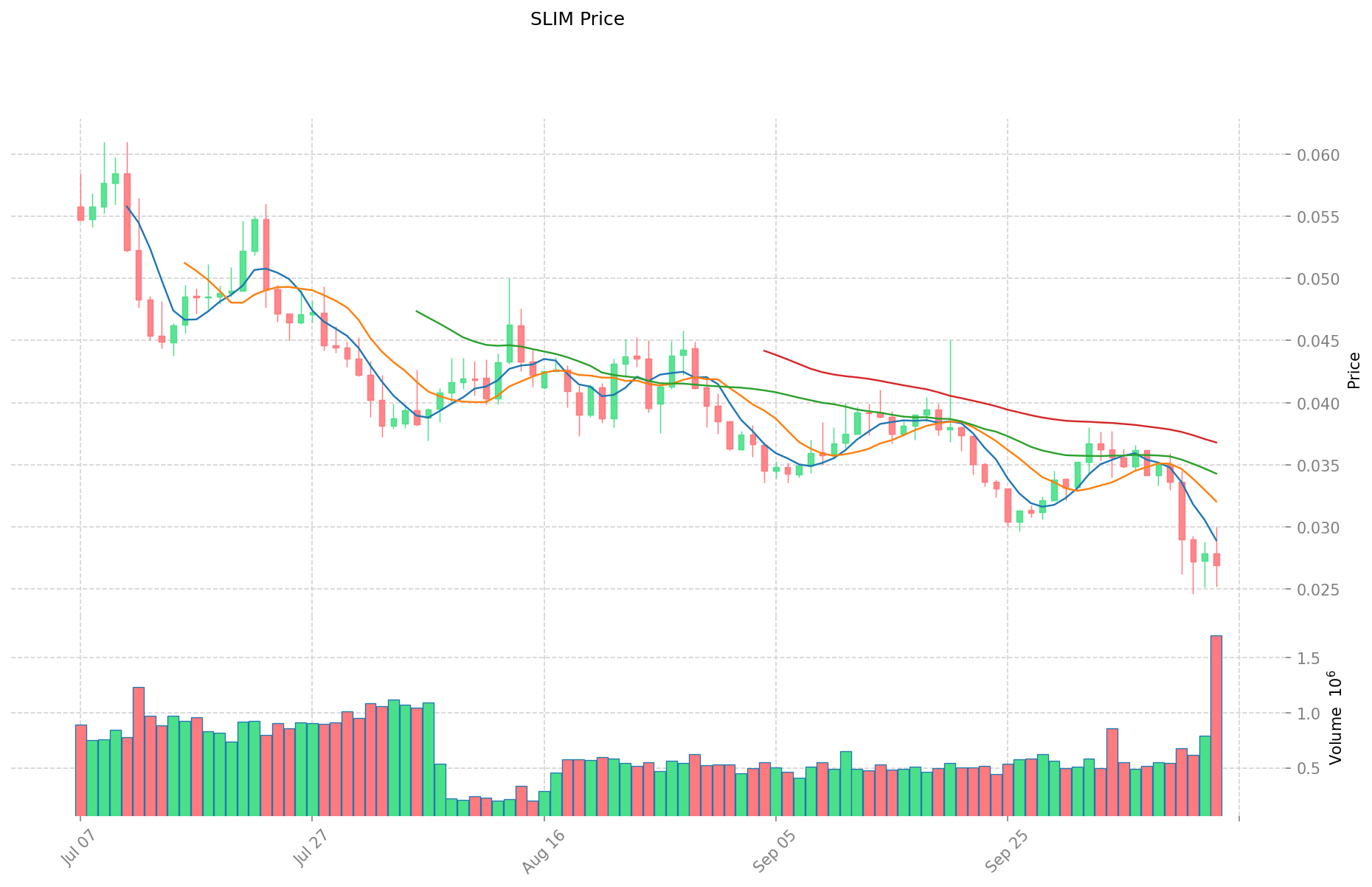
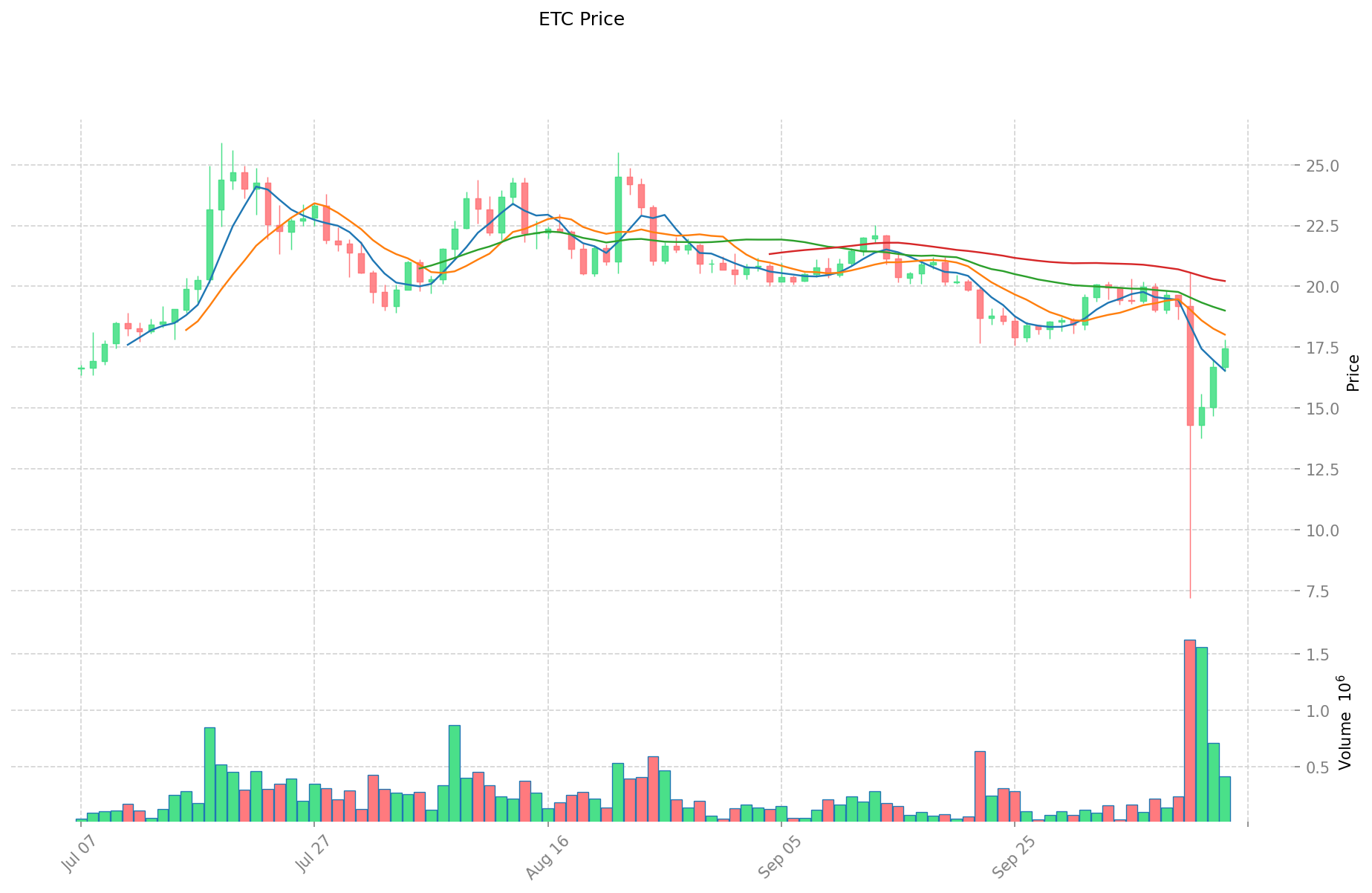
  • Comparative analysis: SLIM has declined from its all-time high of $5.5 to a current price of $0.02691, while ETC has fallen from $167.09 to $17.495.

Current Market Situation (2025-10-14)

  • SLIM current price: $0.02691
  • ETC current price: $17.495
  • 24-hour trading volume: SLIM $46,010.44 vs ETC $6,952,749.22
  • Market Sentiment Index (Fear & Greed Index): 38 (Fear)

Click to view real-time prices:

price_image1 price_image2

II. Core Factors Affecting the Investment Value of SLIM vs ETC

Supply Mechanism Comparison (Tokenomics)

  • SLIM: Fixed supply model with 10 billion total token supply
  • ETC: Deflationary model with capped supply of 210 million coins
  • 📌 Historical pattern: Deflationary mechanisms like ETC's tend to create upward price pressure over time, while SLIM's tokenomics depend more on utility and adoption within its ecosystem.

Institutional Adoption and Market Applications

  • Institutional holdings: ETC has longer history of institutional interest due to its status as original Ethereum chain
  • Enterprise adoption: ETC maintains appeal for applications requiring immutability, while SLIM focuses on DeFi applications
  • Regulatory attitudes: ETC benefits from regulatory clarity as established asset, while SLIM faces typical regulatory uncertainties of newer tokens

Technical Development and Ecosystem Building

  • SLIM technical upgrades: Focus on scaling solutions and cross-chain interoperability
  • ETC technical development: Maintains commitment to proof-of-work and immutability principles
  • Ecosystem comparison: ETC has established mining community and legacy applications, while SLIM is developing new DeFi use cases and services

Macroeconomic and Market Cycles

  • Performance in inflationary environments: ETC often positioned as "digital gold" with stronger inflation hedge properties
  • Macroeconomic monetary policy: Both assets show sensitivity to interest rates and dollar strength
  • Geopolitical factors: ETC's established network provides stability during uncertainty, while SLIM's newer ecosystem may face additional volatility III. 2025-2030 Price Prediction: SLIM vs ETC

Short-term Forecast (2025)

  • SLIM: Conservative $0.02346 - $0.0276 | Optimistic $0.0276 - $0.03726
  • ETC: Conservative $12.9537 - $17.505 | Optimistic $17.505 - $18.9054

Mid-term Forecast (2027)

  • SLIM may enter a growth phase, with an estimated price range of $0.026278029 - $0.045453888
  • ETC may enter a consolidation phase, with an estimated price range of $12.8392173 - $20.93780052
  • Key drivers: Institutional capital inflow, ETF, ecosystem development

Long-term Forecast (2030)

  • SLIM: Base scenario $0.026914045191153 - $0.047217623142375 | Optimistic scenario $0.047217623142375 - $0.070354258482138
  • ETC: Base scenario $13.46449794769989 - $26.400976368039 | Optimistic scenario $26.400976368039 - $28.24904471380173

View detailed price predictions for SLIM and ETC

Disclaimer

SLIM:

年份 预测最高价 预测平均价格 预测最低价 涨跌幅
2025 0.03726 0.0276 0.02346 2
2026 0.0385917 0.03243 0.0301599 20
2027 0.045453888 0.03551085 0.026278029 31
2028 0.04736437173 0.040482369 0.03805342686 50
2029 0.05051187591975 0.043923370365 0.03821333221755 63
2030 0.070354258482138 0.047217623142375 0.026914045191153 75

ETC:

年份 预测最高价 预测平均价格 预测最低价 涨跌幅
2025 18.9054 17.505 12.9537 0
2026 21.300084 18.2052 10.741068 4
2027 20.93780052 19.752642 12.8392173 12
2028 22.5831955986 20.34522126 16.6830814332 16
2029 31.337744306778 21.4642084293 18.244577164905 22
2030 28.24904471380173 26.400976368039 13.46449794769989 50

IV. Investment Strategy Comparison: SLIM vs ETC

Long-term vs Short-term Investment Strategies

  • SLIM: Suitable for investors focusing on DeFi ecosystem potential and Solana-based applications
  • ETC: Suitable for investors seeking stability and potential inflation hedge properties

Risk Management and Asset Allocation

  • Conservative investors: SLIM: 20% vs ETC: 80%
  • Aggressive investors: SLIM: 60% vs ETC: 40%
  • Hedging tools: Stablecoin allocation, options, cross-currency combinations

V. Potential Risk Comparison

Market Risks

  • SLIM: Higher volatility due to newer ecosystem and smaller market cap
  • ETC: Susceptible to broader cryptocurrency market trends and Ethereum ecosystem developments

Technical Risks

  • SLIM: Scalability issues, network stability dependent on Solana blockchain
  • ETC: Hash rate concentration, potential security vulnerabilities

Regulatory Risks

  • Global regulatory policies may have differing impacts on both assets, with ETC potentially benefiting from its established status

VI. Conclusion: Which Is the Better Buy?

📌 Investment Value Summary:

  • SLIM advantages: Growing DeFi ecosystem, potential for rapid adoption within Solana network
  • ETC advantages: Established network, immutability principles, potential inflation hedge

✅ Investment Advice:

  • New investors: Consider a balanced approach with a higher allocation to ETC for stability
  • Experienced investors: Explore opportunities in SLIM's ecosystem while maintaining ETC exposure
  • Institutional investors: Evaluate ETC for long-term holdings, monitor SLIM for emerging DeFi opportunities

⚠️ Risk Warning: The cryptocurrency market is highly volatile. This article does not constitute investment advice. None

VII. FAQ

Q1: What are the main differences between SLIM and ETC? A: SLIM is a newer token focused on DeFi applications within the Solana ecosystem, while ETC is an established cryptocurrency that maintains the original Ethereum blockchain's principles. ETC has a larger market cap, higher trading volume, and a longer history, while SLIM offers potential growth within the expanding Solana network.

Q2: Which cryptocurrency has performed better historically? A: ETC has reached a higher all-time high price of $167.09 in May 2021, compared to SLIM's all-time high of $5.5 in September 2021. However, both have seen significant declines from their peak prices, with ETC currently trading at $17.495 and SLIM at $0.02691 as of October 14, 2025.

Q3: How do the supply mechanisms of SLIM and ETC differ? A: SLIM has a fixed supply model with a total token supply of 10 billion, while ETC follows a deflationary model with a capped supply of 210 million coins. ETC's deflationary mechanism tends to create upward price pressure over time.

Q4: What are the long-term price predictions for SLIM and ETC? A: By 2030, SLIM is predicted to reach a base scenario of $0.026914045191153 - $0.047217623142375, with an optimistic scenario of up to $0.070354258482138. ETC is forecasted to reach a base scenario of $13.46449794769989 - $26.400976368039, with an optimistic scenario of up to $28.24904471380173.

Q5: Which cryptocurrency is better suited for different types of investors? A: SLIM may be more suitable for investors focusing on DeFi ecosystem potential and Solana-based applications, while ETC may be better for those seeking stability and potential inflation hedge properties. Conservative investors might consider allocating 20% to SLIM and 80% to ETC, while aggressive investors might opt for 60% SLIM and 40% ETC.

Q6: What are the main risks associated with investing in SLIM and ETC? A: SLIM faces higher volatility due to its newer ecosystem and smaller market cap, as well as potential scalability issues. ETC is susceptible to broader cryptocurrency market trends and potential security vulnerabilities. Both face regulatory risks, though ETC may benefit from its more established status.

Q7: How do institutional adoption and market applications compare between SLIM and ETC? A: ETC has a longer history of institutional interest due to its status as the original Ethereum chain and maintains appeal for applications requiring immutability. SLIM focuses on DeFi applications within the Solana ecosystem but faces typical regulatory uncertainties of newer tokens.

Q8: What factors should investors consider when choosing between SLIM and ETC? A: Investors should consider their risk tolerance, investment timeline, interest in specific blockchain ecosystems (Solana vs Ethereum), and views on deflationary vs fixed supply models. They should also evaluate the potential for growth in DeFi applications (SLIM) versus established network effects and potential as a store of value (ETC).

* The information is not intended to be and does not constitute financial advice or any other recommendation of any sort offered or endorsed by Gate.
Related Articles
How does AVAX compare to Ethereum and Solana in performance and market share?

How does AVAX compare to Ethereum and Solana in performance and market share?

This article provides a comparative analysis of AVAX, Ethereum, and Solana, focusing on performance metrics and market share. It explores the distinctive advantages each platform offers, including transaction speed, cost-effectiveness, and user adoption. Solana leads in active users and decentralization metrics, while AVAX excels in transaction finality and scalability. The burgeoning DeFi sector on AVAX shows significant growth, underscoring its appeal for users seeking innovative, decentralized solutions. This overview targets crypto enthusiasts and investors looking to understand the evolving blockchain landscape.
10-23-2025, 11:54:37 AM
What is the Difference Between Competitor Analysis and Market Share in Crypto?

What is the Difference Between Competitor Analysis and Market Share in Crypto?

This article delves into the distinctions between competitor analysis and market share in the crypto industry, focusing on key performance metrics of top competitors including Ethereum, Solana, Ripple, BNB Chain, and ENSO. It explores the unique value propositions of ENSO, highlighting its strengths in blockchain interoperability and integrated trading platforms. The article also examines market share shifts, emphasizing strategic investments and sales growth. It addresses the needs of crypto investors and analysts seeking insights into competitive dynamics and market trends. Read on to understand the strategic positioning and advantages of leading crypto platforms.
10-25-2025, 9:16:35 AM
How Does HBAR Compare to Ethereum and Solana in 2030?

How Does HBAR Compare to Ethereum and Solana in 2030?

The article "How Does HBAR Compare to Ethereum and Solana in 2030?" delves into the projected performance, market cap, and technological advantages of HBAR, Ethereum, and Solana by 2030. It highlights Ethereum's dominance in smart contracts and Solana's transaction efficiency, contrasting them with Hedera's enterprise-focused scalability and Hashgraph consensus mechanism. The content is tailored for investors and tech enthusiasts aiming to understand strategic growth, network capabilities, and potential market shifts among these blockchain giants. Key terms include blockchain performance, market projections, HBAR, Ethereum, Solana, and enterprise adoption.
12-1-2025, 9:53:21 AM
How Does Avalanche (AVAX) Compare to Ethereum, Solana, and Polkadot in Market Cap and Performance?

How Does Avalanche (AVAX) Compare to Ethereum, Solana, and Polkadot in Market Cap and Performance?

This article examines Avalanche (AVAX) in comparison to Ethereum, Solana, and Polkadot, focusing on market cap, performance metrics, and competitive advantages. Key insights include AVAX's unique three-chain architecture enabling superior scalability and instant transaction finality. The piece discusses how AVAX's growing ecosystem and DeFi dominance, reflected in impressive Total Value Locked growth, offers compelling benefits for developers and investors. This analysis addresses the pressing need to understand mid-tier blockchain network positioning for cryptocurrency enthusiasts and market participants.
12-20-2025, 3:32:07 AM
USDT price trend analysis in 2025: Tether stablecoin market outlook

USDT price trend analysis in 2025: Tether stablecoin market outlook

In May 2025, the price of Tether USDT stabilizes at 1 US dollar, demonstrating its dominant position in the stablecoin market. Future value predictions for USDT indicate that its status as the preferred cryptocurrency for trading will continue to strengthen. This article delves into the Tether stablecoin market, discusses the factors contributing to the stability of USDT prices, and evaluates the prospects of USDT adoption in the Web3 ecosystem in light of current cryptocurrency market trends.
5-25-2025, 1:20:50 PM
Ethereum 2025 Beginner's Guide: Working Principles, Smart Contracts, and Investment Strategies

Ethereum 2025 Beginner's Guide: Working Principles, Smart Contracts, and Investment Strategies

This article delves into the development status of Ethereum in 2025, including its working principles, applications of smart contracts, and investment strategies. The article provides a detailed analysis of Ethereum's technological upgrades, comparison with Bitcoin, and diversified investment methods. It is suitable for cryptocurrency investors, blockchain developers, and Web3 enthusiasts to read. The content covers basic knowledge of Ethereum, the impact of Pectra upgrade, DeFi ecosystem, and NFT market, providing readers with a comprehensive beginner's guide to Ethereum.
5-26-2025, 7:36:28 AM
Recommended for You
Evaluating Major Ethereum Scalability Solutions

Evaluating Major Ethereum Scalability Solutions

The article delves into the pivotal Ethereum vs. Ethereum Classic split, exploring their impact and evolution. It addresses Ethereum's journey, innovations, and the DAO hack that led to the split, providing critical insights into blockchain governance. Key differences in consensus mechanisms, market influence, developer communities, and philosophical divides are analyzed, catering to developers and enthusiasts seeking understanding of blockchain adaptability vs. immutability. A comparative evaluation of their roles in decentralization and technological advancement guides developers in choosing the right platform for their needs. Essential for anyone navigating the cryptocurrency ecosystem.
12-20-2025, 7:13:51 AM
Understanding the Security Challenges of Wrapped Tokens

Understanding the Security Challenges of Wrapped Tokens

The article "Understanding the Security Challenges of Wrapped Tokens" explores the innovative concept of wrapped tokens which enhance blockchain interoperability. It explains how wrapped tokens work, their advantages in enabling cross-chain transactions, and associated risks such as centralization, smart contract vulnerabilities, and regulatory challenges. Targeted at crypto traders and blockchain enthusiasts, it addresses the need for practical solutions to use digital assets across different platforms, simultaneously discussing potential security concerns. The structured content enables readers to grasp the complexities and operational benefits of wrapped tokens, emphasizing the importance of security measures in their use.
12-20-2025, 7:11:48 AM
Guide to Purchasing Wiener AI Tokens Securely

Guide to Purchasing Wiener AI Tokens Securely

This guide provides a step-by-step process for securely acquiring Wiener AI tokens through decentralized trading platforms. It covers setting up a Gate account, establishing a Web3 wallet, and swapping stablecoins for Wiener AI. The article also discusses secure storage options and potential uses of the token, emphasizing its suitability for cryptocurrency investors aiming for diversification and passive income. With enhanced security measures and intuitive platforms, the guide aims to facilitate both beginners and experienced traders in navigating the crypto ecosystem efficiently.
12-20-2025, 7:10:00 AM
Navigating US Crypto Regulations: Trading Pauses and Custodian Guidelines

Navigating US Crypto Regulations: Trading Pauses and Custodian Guidelines

This article explores the landscape of US crypto regulations, focusing on trading halts and custodian guidelines. It explains the mechanics and reasons behind trading halts in both traditional and crypto markets, highlighting their impact on trader autonomy and market stability. Discussing the pros and cons, it addresses the challenges faced by traders and offers insights on avoiding these halts through self-custodial wallets. Additionally, the role of US-based cryptocustodian services is examined, offering solutions for secure asset management. The article aims to enlighten traders on making informed decisions regarding trading strategies and asset custody.
12-20-2025, 7:09:58 AM
Understanding Flash Loans in Crypto DeFi

Understanding Flash Loans in Crypto DeFi

This article delves into flash loans within the DeFi ecosystem, spotlighting their mechanics, applications, and risks. Flash loans offer instant access to capital without collateral within a single blockchain transaction, providing innovative trading opportunities and highlighting potential vulnerabilities in smart contracts. The piece addresses arbitrage, self-liquidation, collateral swapping, and outlines risks associated with execution speed and security concerns. Targeted at experienced traders, it evaluates profitability factors and systemic impacts of flash loans. Optimized for clarity and quick scanning, it enhances keyword density relating to DeFi and flash loan strategies.
12-20-2025, 7:07:59 AM
Blockchain Leadership: Pioneering the Future with BlockDAG Innovation

Blockchain Leadership: Pioneering the Future with BlockDAG Innovation

The article explores the innovative impact BlockDAG has on blockchain technology, driven by visionary leadership and advanced DAG-based architecture. It delves into how the BlockDAG team, led by Antony Turner, overcomes blockchain's scalability and security challenges, highlighting their strategic execution, global partnerships, and cybersecurity advancements. This content is tailored for blockchain enthusiasts, investors, and developers seeking insight into decentralized solutions. Highlighting key achievements such as successful fundraising and a thriving developer ecosystem, the article positions BlockDAG as a leader in scalable and secure blockchain infrastructures.
12-20-2025, 7:07:38 AM