Bitcoin Price Outlook: Could BTC Drop Below $80,000?
Recent Bitcoin Price Performance Review
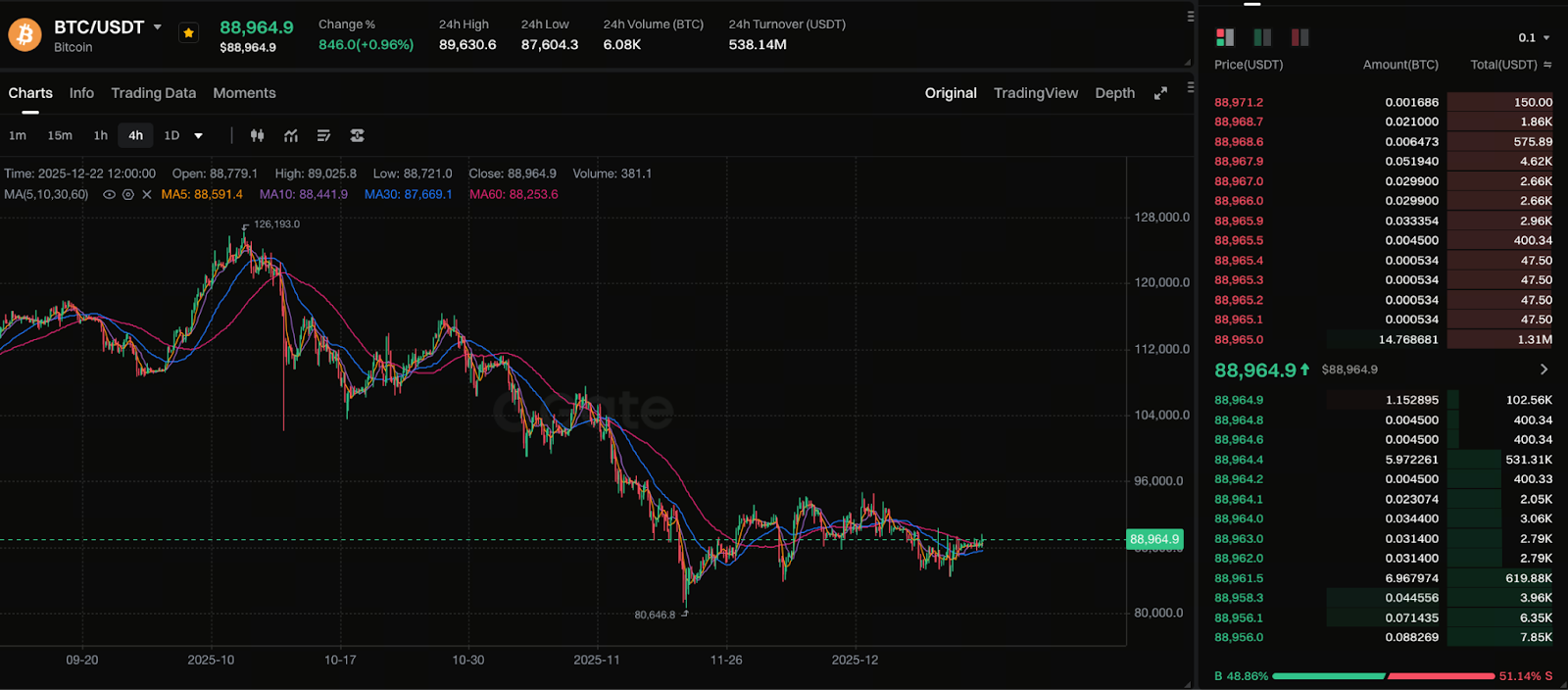
Chart: https://www.gate.com/trade/BTC_USDT
Since the start of 2025, Bitcoin has seen a pronounced rally, reaching record highs. As BTC entered higher price zones, selling pressure began to surface. The price subsequently pulled back and is now consolidating mainly within the $80,000–$90,000 range.
This price action is typical in the crypto market. After sharp advances, the market generally consolidates or corrects to absorb profit-taking and reassess both the macro environment and overall risk appetite. Bitcoin is now at a pivotal turning point for its trend.
Key Technical Levels and Market Structure Analysis
From a technical analysis standpoint, $80,000 serves as a critical psychological and structural support level. Previous pullbacks saw buyers step in at this zone, establishing interim support.
If BTC holds above this level, the market could form a new consolidation range, setting the stage for a rebound. However, a decisive break below $80,000 on higher volume may trigger a deeper technical correction and shift the next target range lower.
The interplay between short-term and medium-term moving averages also merits attention. When short-term averages remain below their medium-term counterparts, it typically signals a weak market structure.
Probability of BTC Breaking Below $80,000
Given current market conditions, a drop below $80,000 is not an extreme scenario for Bitcoin, but a realistic possibility that warrants consideration. Several factors could drive a move lower:
- Profit-taking pressure at higher levels remains unresolved
- Overall trading volume has decreased compared to previous periods
- Short-term outlooks among investors are diverging, increasing caution and wait-and-see sentiment
Without clear bullish catalysts, prices are more vulnerable to sentiment swings, making short-term tests of key support levels unsurprising.
Major Risk Factors Affecting Bitcoin Price
Currently, the main risk factors impacting BTC prices include:
Macroeconomic uncertainty: Global financial markets remain divided over interest rates, inflation, and economic growth prospects. High-risk assets like Bitcoin are prone to volatility in this environment.
Shifts in market sentiment: When optimism gives way to caution, Bitcoin often leads the response, especially at elevated price levels.
Technical correction requirements: After strong rallies, the market typically needs corrections to restore technical indicators—a healthy, though sometimes sharp, process.
How Investors Should Approach the Current Market
For short-term traders, $80,000 marks a key risk threshold that demands close monitoring of price action and trading volume. For medium- and long-term investors, a temporary pullback does not necessarily signal a trend reversal; it often reflects normal cyclical volatility.
The priority is to distinguish short-term noise from long-term trends and to manage position sizes and risk exposure prudently.
Summary and Market Outlook
In summary, Bitcoin could dip below $80,000 in the near term; however, this does not automatically indicate a long-term trend reversal. The market is currently seeking a new equilibrium within its higher range.
Going forward, BTC price trends will depend on capital flows, macroeconomic developments, and shifts in market confidence. Investors should maintain rational expectations and avoid emotional decision-making when trading.
Share
Content


Related Articles

2025 BTC Price Prediction: BTC Trend Forecast Based on Technical and Macroeconomic Data

Flare Crypto Explained: What Is Flare Network and Why It Matters in 2025

Pi Coin Transaction Guide: How to Transfer to Gate.com

How to Use a Crypto Whale Tracker: Top Tool Recommendation for 2025 to Follow Whale Moves

What is N2: An AI-Driven Layer 2 Solution