


Why South Korea May Be The Most Important Crypto Market Of The Next Decade
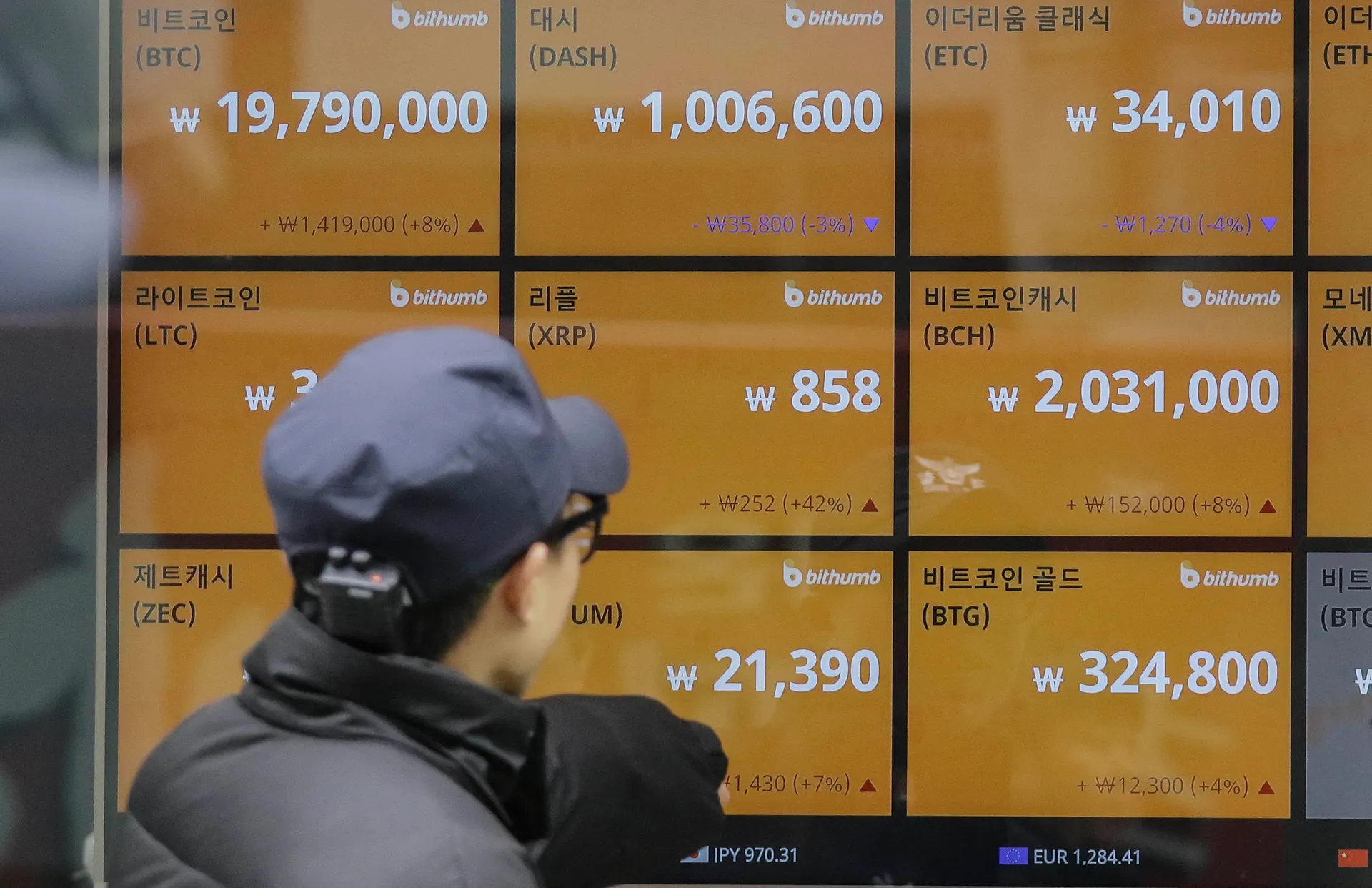
Dec 15, 2017-Seoul, South Korea-A Screen shows the prices of bitcoin at a virtual currency exchange store in Seoul, South Korea. South Korean is studying ways to regulate speculative trading in crypto currencies as the latest surge in prices stokes a craze over bitcoins. (Photo by Seung-il Ryu/NurPhoto via Getty Images)
… More
NurPhoto via Getty Images
Many global observers still view South Korea through an old lens. Ask crypto market analysts in the West about South Korean crypto markets and they will likely describe high retail trading volumes, fast-moving altcoin cycles and the “kimchi premium” era, when bitcoin traded far above global prices. That’s true, but the description also freezes South Korea in a moment that no longer reflects its real influence or ambitions.
South Korea was early. The world just was not paying attention. Now crypto users and companies in South Korea have a competitive advantage.
The country embraced Bitcoin and Ethereum network innovations before most markets even noticed the possibilities, and the depth of the country’s early user base created conditions that few other countries could match. Today, South Korea has a maturing regulatory framework, engaged institutions, corporate appetite for blockchain applications and a robust developer culture. The result is a market that is better positioned than most to shape the next phase of digital assets.
The blockchain analytics firm Chainalysis ranked South Korea as the 15th-most active nation in the world in the 2025 Global Crypto Adoption Index. That’s no small feat for a country with more than 20% of the population over the age of 65, according to South Korean government figures, yet this Asian nation is now having a disproportionately large impact on global digital assets.
Korea Blockchain Week offers a window into this shift. What began as an attempt to close the information gap between South Korea and the world has grown into one of the largest crypto gatherings on the planet. More than 136,000 people have attended since the annual tech conference began. And the rapid pace of growth continues. Many Korean builders argue that the rise of KBW mirrors the rise of the country in the global economy.
“From the outside, people still see Korea through the lens of trading hype,” Seonik Jeon, one of the organizers behind Korea Blockchain Week and the CEO of the startup Factblock, told me in an interview. “They don’t see the engineering work, the corporate pilots or the builders who have been doing real R&D for years.”
South Korea Was Early To Explore Crypto Markets
Crypto’s cultural breakthrough in South Korea came in 2017, when a wave of initial coin offerings attracted retail investors and pushed bitcoin prices to new highs, right at the correct time in the bitcoin-mining halving cycle to make a splash. Digital assets became a mainstream topic across the country. But that bull market moment was not a sudden fad. It was the product of infrastructure that had been built since 2013, when Korbit became the first domestic crypto exchange, followed by Bithumb in 2014%20is,rebranded%20as%20Bithumb%20in%202015.).
By late 2017, daily crypto trading volume in South Korea had reached levels that reportedly exceeded major stock markets. The South Korean won became the third most traded currency in global bitcoin markets, behind only the US dollar and Japanese yen.
This is when South Korea showed a pattern that would define the next decade. When a new technology arrives, South Koreans do not wait to see what the rest of the world thinks. Instead, South Koreans from diverse backgrounds, not only wealthy tech elites, leaned all the way in.
Despite the diversity of local business ventures and crypto users, the narrative abroad drifted toward a simplified idea of the country as merely a high-volume trading environment. The well publicized collapse of the stablecoin project Terra, and regulatory crackdowns that followed, reinforced stereotypes.
Part of the reason more Americans don’t know about the robust crypto scene in the South Korean capital, Seoul, is the language barrier. Many South Korean projects and builders do not get English-language coverage in global media outlets. Another factor is the shadow of past speculative cycles, which obscures the depth of South Korea’s institutional and technological foundations.
Jeon launched KBW in 2018 and tickets sold out almost immediately, which was the first signal that the country had the potential to host a global-scale event.
“It was a bridge and a way to connect Korea’s community with the world and the world with Korea,” Jeon said.
In the years that followed, attendance climbed rapidly, even as the venues grew larger, and global industry leaders began asking to participate.
Meanwhile, developers across AI, gaming and blockchain projects have been building production-ready tools for years. Major South Korean banks are exploring digital asset custody, tokenized securities and blockchain-based settlement systems. South Korea also maintains some of the strongest compliance frameworks for exchanges anywhere in the world, supported by policies such as the real-name trading system introduced in 2018.
South Korea is not only a trading market. It is increasingly becoming an engineering and enterprise powerhouse in the making.
Insights From Korea Blockchain Week 2025
South Korea’s enterprise shift is already visible in the market’s underlying infrastructure. Shinhan Investment Corp. and NH Investment & Securities have completed token securities sandbox tests for fractionalized bonds and real-estate assets, signaling that major financial institutions are preparing for tokenized markets at scale. At the same time, South Korea’s real-name verification system applies to nearly 100% of local exchange accounts, reducing fraud and wash trading far more effectively than most Western markets. Together, these developments show a country building the institutional foundations for digital assets, not just participating in speculative cycles.
South Korea’s early adoption continued despite significant market volatility, notably due to the Terra/Luna collapse in 2022. This incident has heightened caution among global institutional investors. Consequently, to regain public trust, local regulators have had to prove that their compliance frameworks are both robust and globally trustworthy.
As of 2025, there’s a market shift underway in South Korea, a move from consumer-driven adoption to enterprise-driven development. Korean corporations have a long history of absorbing new technologies quickly, and blockchain is no exception. Banks are studying custody and tokenized financial products. Logistics and manufacturing firms are exploring blockchain-based transparency tools. Game companies are integrating digital assets into their platforms both for consumers and for enterprise use cases. Business-to-business deployment is now outpacing customer-facing growth.
“Korean companies move fast once they see something work,” Jeon said. “A successful consumer product often becomes the blueprint for enterprise adoption.”
If enterprise adoption is what defines the next chapter of crypto, South Korea is not just prepared. It might already be ahead.
South Korea’s Regulatory Head Start
South Korea was one of the first nations to establish clear frameworks for trading and compliance. The introduction of the real-name trading system mitigated speculative excess and fostered transparency during a time when many other countries lacked comparable measures. While initiatives like the Virtual Asset User Protection Act and Security Token Offerings guidelines have reinforced oversight without stifling innovation, ongoing challenges remain.
Although South Korea’s regulatory environment, while progressive, may still need to align more closely with global standards, particularly regions like the Europe and North America, a flexible and adaptive regulatory approach could enable South Korea to maintain its competitive edge in the fast-evolving landscape of digital assets.
Jeon said that he expects the recent election in South Korea, won by former opposition leader and current President Lee Jae-myung, to bring gradual progress rather than abrupt change. Both major political parties now recognize that nearly 6 million Koreans hold crypto. So both parties have proposed policies aimed at supporting the blockchain industry. Over time, this could lead to expanded institutional participation, including banks offering digital asset services and securities firms engaging with tokenized financial products.
Korea is unlikely to pursue rapid deregulation, but it will continue refining rules that balance investor protection with market growth. For many institutions, stability is considered an appealing aspect of operation in South Korea.
Seoul Is Becoming A Global Hub In 2026
Jeon said that he intends to eventually transform KBW into an event series throughout the year, not just during the annual gathering. As part of that effort, FactBlock is developing FABLO, a digital platform aimed at extending KBW’s community into an always-on environment
Even beyond KBW, Seoul is becoming a top-tier global hub thanks to tech-savvy policies that attract talent and businesses. Next, the South Korean scene will need a few more flagship projects that demonstrate global leadership. But the underlying ingredients are already present. According to the 2024 Developer Report by Electric Capital, Asia is home to 32% of active developers, with South Korea being one of the most democratic locations with mature regulatory frameworks.
When asked what message he would send to builders and investors abroad, Jeon said. “Pay close attention to Korea. The country has a culture that embraces innovation, a population that understands digital assets, and institutions that are preparing for the next generation of blockchain technology.”
Some global teams may prefer to test out new crypto products in South Korea first because the market is demanding but engaged and loyal once they are convinced.
All things considered, if the next decade of crypto is shaped by enterprise adoption, regulatory clarity, and rapid consumer experimentation, South Korea is already well-positioned to lead.
Disclaimer:
- This article is reprinted from [Forbes]. All copyrights belong to the original author [Azeem Khan,Contributor.]. If there are objections to this reprint, please contact the Gate Learn team, and they will handle it promptly.
- Liability Disclaimer: The views and opinions expressed in this article are solely those of the author and do not constitute any investment advice.
- Translations of the article into other languages are done by the Gate Learn team. Unless mentioned, copying, distributing, or plagiarizing the translated articles is prohibited.
Share


Related Articles

The Future of Cross-Chain Bridges: Full-Chain Interoperability Becomes Inevitable, Liquidity Bridges Will Decline

Solana Need L2s And Appchains?

Sui: How are users leveraging its speed, security, & scalability?

Navigating the Zero Knowledge Landscape

What is Tronscan and How Can You Use it in 2025?
