

Trade
Basic
Futures
Futures
Hundreds of contracts settled in USDT or BTC
Options
HOT
Trade European-style vanilla options
Unified Account
Maximize your capital efficiency
Demo Trading
Futures Kickoff
Get prepared for your futures trading
Futures Events
Futures Mall
Participate in events to win generous rewards
Demo Trading
Use virtual funds to experience risk-free trading
Earn
Launch
CandyDrop
Collect candies to earn airdrops
Launchpool
Quick staking, earn potential new tokens
HODLer Airdrop
Hold GT and get massive airdrops for free
Launchpad
Be early to the next big token project
Alpha Points
NEW
Trade on-chain assets and enjoy airdrop rewards!
Futures Points
NEW
Earn futures points and claim airdrop rewards
Investment
Simple Earn
Earn interests with idle tokens
Auto-Invest
Auto-invest on a regular basis
Dual Investment
Buy low and sell high to take profits from price fluctuations
Soft Staking
Earn rewards with flexible staking
Crypto Loan
0 Fees
Pledge one crypto to borrow another
Lending Center
One-stop lending hub
VIP Wealth Hub
Customized wealth management empowers your assets growth
Private Wealth Management
Customized asset management to grow your digital assets
Quant Fund
Top asset management team helps you profit without hassle
Staking
Stake cryptos to earn in PoS products
Smart Leverage
NEW
No forced liquidation before maturity, worry-free leveraged gains
GUSD Minting
Use USDT/USDC to mint GUSD for treasury-level yields

More



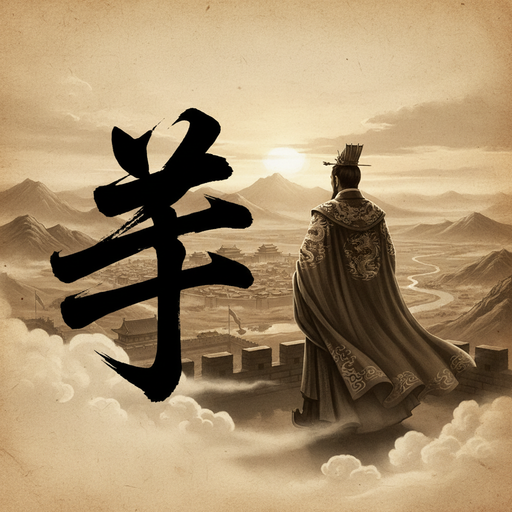



The mystery of Satoshi Nakamoto's farewell: How a decision fifteen years ago changed the future of Bitcoin
Who is Satoshi Nakamoto? This question has puzzled the entire crypto world since the birth of Bitcoin. But perhaps what’s more worth exploring is not the true identity of Satoshi Nakamoto, but why this mysterious creator chose to step away, and how his departure has shaped Bitcoin into what it is today.
According to an in-depth six-month investigation by Bitcoin Magazine editor Pete Rizzo, we finally get a glimpse into this little-known history. The sealed emails, the evolution of code, the voices of the community—all tell the story of a creator who chose to disappear at the height of his brilliance.
Satoshi Nakamoto’s View of Bitcoin: The End of Central Banks
To understand why Satoshi Nakamoto decided to leave, we must first understand his original intention in creating Bitcoin.
In February 2009, Satoshi wrote a message on the P2P Foundation forum, directly addressing the core issue: “The fundamental problem with traditional currency is all the trust that’s required to make it work. People must trust that central banks won’t devalue the currency, but the history of fiat money is full of breaches of that trust.”
This statement reveals Satoshi’s true goal—Bitcoin was not initially designed to revolutionize payment methods, but to build a currency system that doesn’t rely on central banks or institutional trust. He even straightforwardly said, “Regarding secure electronic payment protocols, indeed no one can act as a central bank or Federal Reserve.”
In other words, Satoshi created not just a currency, but a declaration of war against the existing financial system. Such ambition also laid the groundwork for his later choices.
The Invisible Threat: The Turning Point of 2010
In Rizzo’s research, there’s a detail often overlooked— in 2010, the Bitcoin protocol experienced a serious vulnerability. Someone exploited this flaw to create tens of billions of bitcoins out of thin air, directly violating Satoshi’s “limited supply” principle.
This incident had a profound psychological impact on Satoshi Nakamoto. From then on, he no longer viewed security issues as “accidental,” but began fundamentally changing his approach. His communication with other developers decreased, and he tended to act alone, making code changes and updates without notice. Throughout the second half of 2010, he seemed trapped in an invisible war, doing everything possible to strengthen Bitcoin’s defenses.
This shift was crucial—by the end of 2010, Satoshi gradually transformed from an open leader into a security-obsessed lone wolf.
From “Honeymoon” to “Disillusionment”: The Community’s Betrayal
Interestingly, as Satoshi sought security, the Bitcoin community’s attitude toward him was subtly changing.
Based on Rizzo’s review of community history, user attitudes toward Satoshi Nakamoto can be divided into three phases. In early 2010, people had just discovered this new thing, full of curiosity and respect—this was the “honeymoon period.” As Satoshi began to more strictly maintain authority over the code, the community entered the “awakening period,” questioning his decisions.
The most shocking was that by the end of 2010, the community’s attitude had completely reversed. Some publicly mocked his gender and sexual orientation, others spread memes targeting him, and some openly accused him of failing to meet community needs, causing Bitcoin’s development to stagnate. By then, Satoshi Nakamoto was seen by some radical community members as an obstacle rather than a savior.
Loneliness, perhaps, was the true reflection of Satoshi Nakamoto during that period.
A Genius’s Self-Exile: Farewell in Code
In December 2010, Satoshi Nakamoto posted his final public message on the Bitcoin forum. Four months later, on April 26, 2011, he sent his last email to a small group of developers (including Gavin Andresen, who would later succeed him), explicitly stating that he had “moved on to other matters.”
But the most symbolic act was his subsequent decision—Satoshi Nakamoto personally removed his name from the Bitcoin software license, handing over the code entirely to all “Bitcoin developers.” This was not a forced exit, but a carefully designed, elegant curtain call.
This move deeply reflects Satoshi Nakamoto’s ultimate understanding of decentralization. He realized that as long as he remained in the code, Bitcoin could never truly achieve decentralization. So, he chose self-erasure.
The Legacy of Satoshi Nakamoto: The Transfer of Power
Satoshi’s departure did not mean Bitcoin’s decline. In fact, it was his exit that allowed Bitcoin to enter a new stage of development.
Gavin Andresen took over his role, but more importantly, the leadership model of Bitcoin development fundamentally changed. From a project governed by a “benevolent dictator,” it evolved into a collaborative open-source movement with hundreds of developers. Rizzo points out that this transfer of authority is what truly enabled Bitcoin to decentralize, beyond just the code.
When Satoshi Nakamoto removed himself from Bitcoin’s history, he fulfilled his lifelong dream—creating a currency system that does not depend on any individual or central authority.
Who is Satoshi Nakamoto? Perhaps this question is unnecessary to answer
Fifteen years have passed since Satoshi Nakamoto’s last communication. During this time, Bitcoin has weathered countless storms, with its price soaring from a few cents to tens of thousands of dollars. Many have tried to uncover Satoshi Nakamoto’s true identity, but he has successfully hidden himself in the fog of Bitcoin’s code and history.
Perhaps, this is Satoshi Nakamoto’s greatest success. He is not great because his identity is concealed, but because the system he created ultimately transcended him, becoming a self-operating force that requires no creator’s maintenance. When we discuss Bitcoin, we do not need to know who Satoshi is. As he himself wished—decentralization is not just a technical choice, but a thorough self-denial.
Satoshi Nakamoto’s curtain call is, in fact, the moment Bitcoin was truly born.