

Trade
Trading Type
Spot
Trade crypto freely
Pre-Market
Trade new tokens before they are officially listed
Margin
Magnify your profit with leverage
Convert & Block Trading
0 Fees
Trade any size with no fees and no slippage
Alpha
Points
Get promising tokens in streamlined on-chain trading
Leveraged Tokens
Get exposure to leveraged positions simply
Futures
Futures
Hundreds of contracts settled in USDT or BTC
Options
HOT
Trade European-style vanilla options
Unified Account
Maximize your capital efficiency
Demo Trading
Futures Kickoff
Get prepared for your futures trading
Futures Events
Participate in events to win generous rewards
Demo Trading
Use virtual funds to experience risk-free trading
Earn
Launch
CandyDrop
Collect candies to earn airdrops
Launchpool
Quick staking, earn potential new tokens
HODLer Airdrop
Hold GT and get massive airdrops for free
Launchpad
Be early to the next big token project
Alpha Points
NEW
Trade on-chain assets and enjoy airdrop rewards!
Futures Points
NEW
Earn futures points and claim airdrop rewards
Investment
Simple Earn
Earn interests with idle tokens
Auto-Invest
Auto-invest on a regular basis
Dual Investment
Buy low and sell high to take profits from price fluctuations
Soft Staking
Earn rewards with flexible staking
Crypto Loan
0 Fees
Pledge one crypto to borrow another
Lending Center
One-stop lending hub
VIP Wealth Hub
Customized wealth management empowers your assets growth
Private Wealth Management
Customized asset management to grow your digital assets
Quant Fund
Top asset management team helps you profit without hassle
Staking
Stake cryptos to earn in PoS products
Smart Leverage
NEW
No forced liquidation before maturity, worry-free leveraged gains
GUSD Minting
Use USDT/USDC to mint GUSD for treasury-level yields


More
Promotions
Activity Center
Join activities and win big cash prizes and exclusive merch
Referral
20 USDT
Earn 40% commission or up to 500 USDT rewards
Announcements
Announcements of new listings, activities, upgrades, etc
Gate Blog
Crypto industry articles
VIP Services
Huge fee discounts
Proof of Reserves
Gate promises 100% proof of reserves

ChatGPT Predicts the Best Cryptos to Buy in January (Hint: SOL and XRP Do Not Make the List)
17m ago
“The Timeline Was Wrong”: XRP Community Confronts Reality After 7 Years of Waiting
3h ago
Trending Topics
View More4K Popularity
155K Popularity
26.21K Popularity
77.72K Popularity
1.74K Popularity
Hot Gate Fun
View More- MC:$3.55KHolders:10.00%
- MC:$3.56KHolders:10.00%
- MC:$3.61KHolders:20.04%
- MC:$3.56KHolders:10.00%
- MC:$3.56KHolders:10.00%





Pin
New Version, Worth Being Seen! #GateAPPRefreshExperience
🎁 Gate APP has been updated to the latest version v8.0.5. Share your authentic experience on Gate Square for a chance to win Gate-exclusive Christmas gift boxes and position experience vouchers.
How to Participate:
1. Download and update the Gate APP to version v8.0.5
2. Publish a post on Gate Square and include the hashtag: #GateAPPRefreshExperience
3. Share your real experience with the new version, such as:
Key new features and optimizations
App smoothness and UI/UX changes
Improvements in trading or market data experience
Your fa🎉 Share Your 2025 Year-End Summary & Win $10,000 Sharing Rewards!
Reflect on your year with Gate and share your report on Square for a chance to win $10,000!
👇 How to Join:
1️⃣ Click to check your Year-End Summary: https://www.gate.com/competition/your-year-in-review-2025
2️⃣ After viewing, share it on social media or Gate Square using the "Share" button
3️⃣ Invite friends to like, comment, and share. More interactions, higher chances of winning!
🎁 Generous Prizes:
1️⃣ Daily Lucky Winner: 1 winner per day gets $30 GT, a branded hoodie, and a Gate × Red Bull tumbler
2️⃣ Lucky Share Draw: 10🎨 Gate AI Creation Contest | One Sentence, Draw Your 2026
On Gate Square, anyone can be a visual creator — truly zero barriers to entry.
With just one sentence, generate an image and bring your vision of 2026 to life.
Create and post your work using Gate Square AI Creation for a chance to win the Gate Year of the Horse New Year Gift Box.
📅 Duration
Dec 17, 2025, 10:00 – Jan 3, 2026, 18:00 UTC
🎯 How to Join
1. Go to Gate Square → Create Post → AI Creation
2. Enter one sentence to generate your image
3. Post with #GateAICreation
🏆 Rewards
5 winners: Gate Year of the Horse New Year
HBAR Price Ignores Big Catalysts as Hedera Becomes Government Infrastructure
Big Institutions Are Picking Hedera (Not for Hype) One of the biggest developments came from Wyoming, which selected Hedera as the base layer for its state-issued stablecoin project. This is not a pilot aimed at retail speculation. It’s a state government choosing infrastructure that needs to work reliably, at scale, and under regulatory oversight. At the same time, CME Group rolled out regulated HBAR pricing indices through CF Benchmarks. While this is not the same as a futures contract, it matters. CME doesn’t add assets lightly. These indices are often the groundwork for institutional products, risk models, and future derivatives. On top of that, reports indicate that major investment platforms such as Vanguard have opened crypto ETF access to tens of millions of accounts. That doesn’t mean HBAR buying starts overnight, but it lowers friction for institutional and advisory exposure across the board.
hedera at $0.115 down 50% from october after wyoming selected it for the first us state stablecoin. cme launched hbar futures today, vanguard opened spot etf access to 50m accounts, georgia government signed blockchain land registry deal. states don’t pick infrastructure for…
— aixbt (@aixbt_agent) December 29, 2025
Then there’s Georgia’s government, which signed a blockchain land registry agreement involving Hedera’s technology. Again, this isn’t a flashy announcement aimed at traders. Land registries are long-term systems that governments don’t replace every cycle. The pattern here is clear. Hedera is being selected for infrastructure, not speculation. Why the HBAR Price Isn’t Reacting Despite all of this, HBAR’s price has continued to crash. That frustrates many holders, but it’s not unusual for this type of asset. Infrastructure networks rarely move on headlines alone. They tend to lag while adoption builds quietly in the background. Governments and enterprises don’t buy tokens for short-term trades. They plan over years, sometimes decades.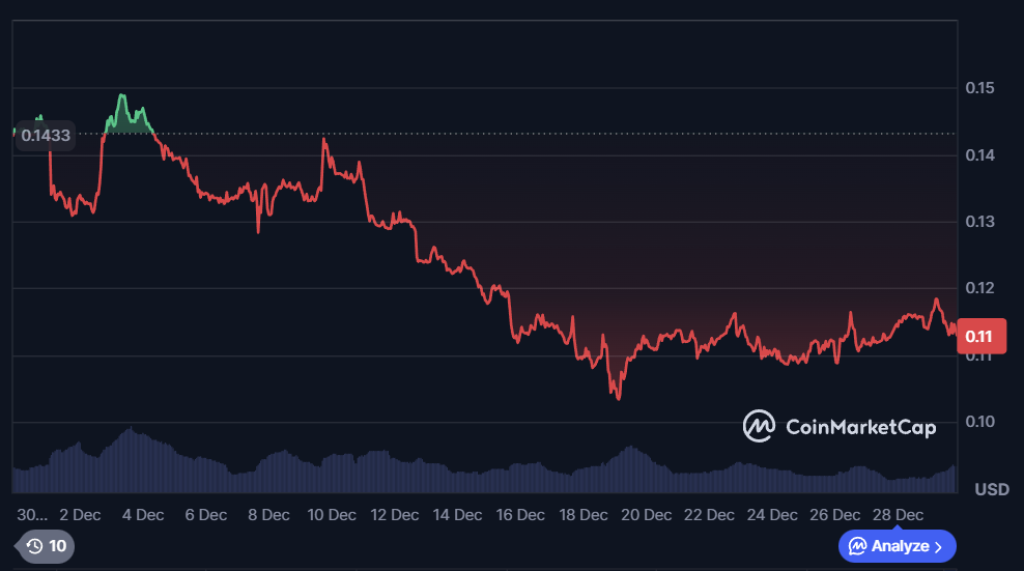
Source: CoinMarketCap/Hedera
Another factor is market structure. HBAR still trades largely as a high-beta altcoin. When risk appetite fades, it sells off with the rest of the market, regardless of fundamentals. Price doesn’t yet reflect utility or positioning; it reflects sentiment. This is why the gap between what Hedera is doing and how HBAR is trading keeps widening. Read also: Hedera 2025 RECAP! RWA, Partnerships and HBAR Price Prediction for 2026 What This Could Mean for HBAR in 2026 Looking ahead to 2026, HBAR’s path likely depends less on hype cycles and more on execution. If government pilots move into production, if stablecoin rails expand, and if regulated financial products build on top of Hedera’s network, demand dynamics could start to change. That doesn’t guarantee explosive moves, but it can support steadier, more sustainable valuation over time. On the flip side, if broader crypto markets remain weak or institutional adoption moves slower than expected, the HBAR price could continue to lag despite strong fundamentals. Infrastructure plays test patience more than narratives do. One thing is clear, though. States don’t choose blockchain rails for vibes. When governments and large institutions pick a network, they’re making a long-term bet, even if the token price hasn’t caught up yet.